
The history of Indian sculpture is profoundly rich. From the rock-cut temples of Mahabalipuram to the caves of Ellora and the magnificent Sun Temple of Konark, our artisans have showcased a divine skill in breathing life into cold stone. In the modern era, if anyone kept this ancient tradition alive through sheer dedication and spiritual practice, it was Pandit Lallu Prasad Sharma ‘Prithvipura Wale’. Emerging from the ‘Khazane Walon Ka Rasta’ in Jaipur, his journey from humble beginnings to international acclaim is a saga of struggle, sacrifice, and creativity that will continue to inspire generations to come.
Table of Contents
- Early Life & Years of Struggle
- The Path of Panditai — Balancing Duty and Art
- Ahmedabad, Return to Jaipur & the Gurus
- The Founding of the Workshop (1987)
- A Historic Legacy — Serving Art Since 1950
- The Adi Gaur Brahmin Murti Samaj — Keepers of Tradition
- Iconic Masterpiece #1 — Ekta Vriksh (The Unity Tree)
- Iconic Masterpiece #2 — Jaipur Darshan
- Awards & National Recognition
- A Timeless Legacy — The Fourth Generation
- Experience His Legacy — Featured Sculptures
- Frequently Asked Questions
Early Life & Years of Struggle
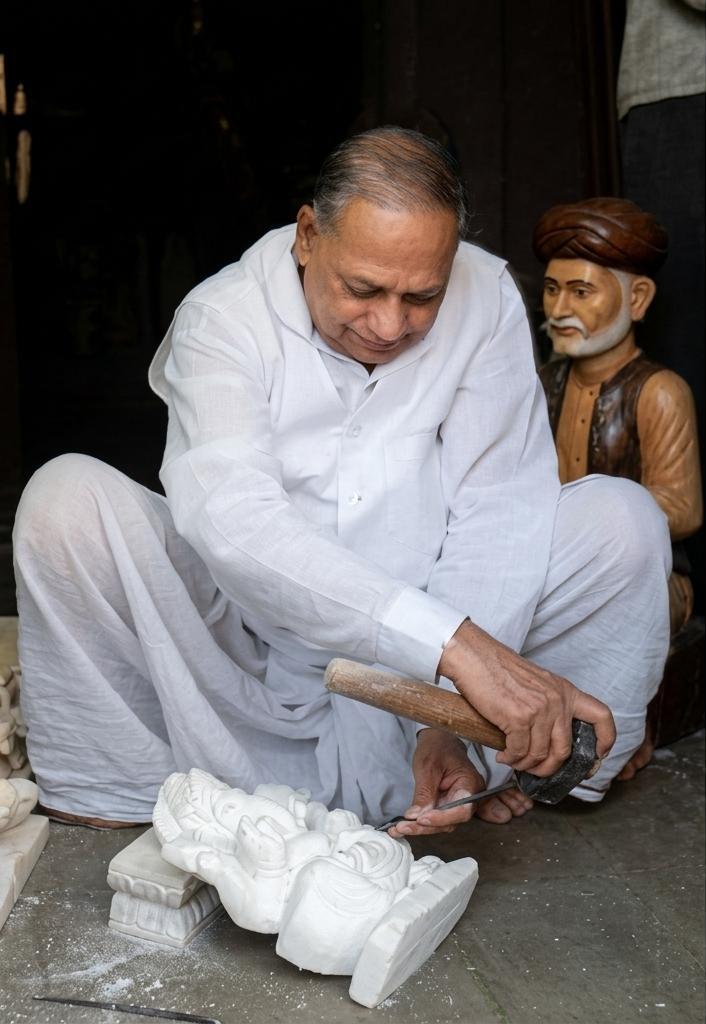
Born in 1938 in the village of Prithvipura, Rajasthan, art was innate to Pandit Lallu Prasad Sharma ‘Prithvipura Wale’. Even as a child, he saw the world differently — not in shapes and colours alone, but in the divine forms that could emerge from ordinary stone. However, his life was not a bed of roses.
He began learning the nuances of sculpture at the tender age of eleven. Chisels and marble dust became his earliest companions, long before most children have chosen a passion in life. Following the untimely demise of his father, the family faced severe financial hardship. The dreams of an artist had to yield, at least temporarily, to the responsibility of a son.
The Path of Panditai — Balancing Duty and Art
To sustain his family, young Lallu Prasad temporarily paused his artistic pursuit to follow the family tradition of Panditai — the priestly duties of a Brahmin scholar. He journeyed to the sacred city of Kashi (Varanasi) to study under revered scholars.
There, he gained deep knowledge of Sanskrit, Astrology (Jyotish), and Vedic rituals. His mind was disciplined; his soul was steeped in the ancient wisdom of the sages. Yet the artist within him remained restless. The rhythm of Sanskrit verses could soothe his intellect but not silence the vision that demanded to be carved into stone.
This dual education — Panditai and sculpture — would later become his greatest strength. The scriptural precision of a Brahmin scholar merged with the intuitive hand of a master sculptor. Every deity he carved would carry both the correct iconographic proportions of Shilpashastra and the felt reverence of a lifelong practitioner of ritual.
Ahmedabad, Return to Jaipur & the Gurus
At the age of eighteen, in search of livelihood and greater artistic opportunity, Lallu Prasad moved to Ahmedabad. Those years hardened him. He learned the practical realities of a working artisan — commissions, deadlines, negotiations, the weight of providing for family through one’s craft.
Eventually, the call of Jaipur brought him home. It was here in the Pink City that he received the guidance that would shape his mastery for life. He learned under two of the greatest sculpture masters of the era:
- ♦ Shri Devi Sahay Ji Kishoriwala — a master of intricate iconographic detail
- ♦ Shri Narayan Lal Ji Tiwari — a venerated custodian of the traditional Rajasthani sculpture school
Under their guidance, Lallu Prasad spent eleven years of rigorous penance and practice. There were no shortcuts. Every day, chisel to stone. Every stroke, an offering. Every finished sculpture, a step closer to the mastery that would one day earn him the title of Shilp Guru.
The Founding of the Workshop (1987)
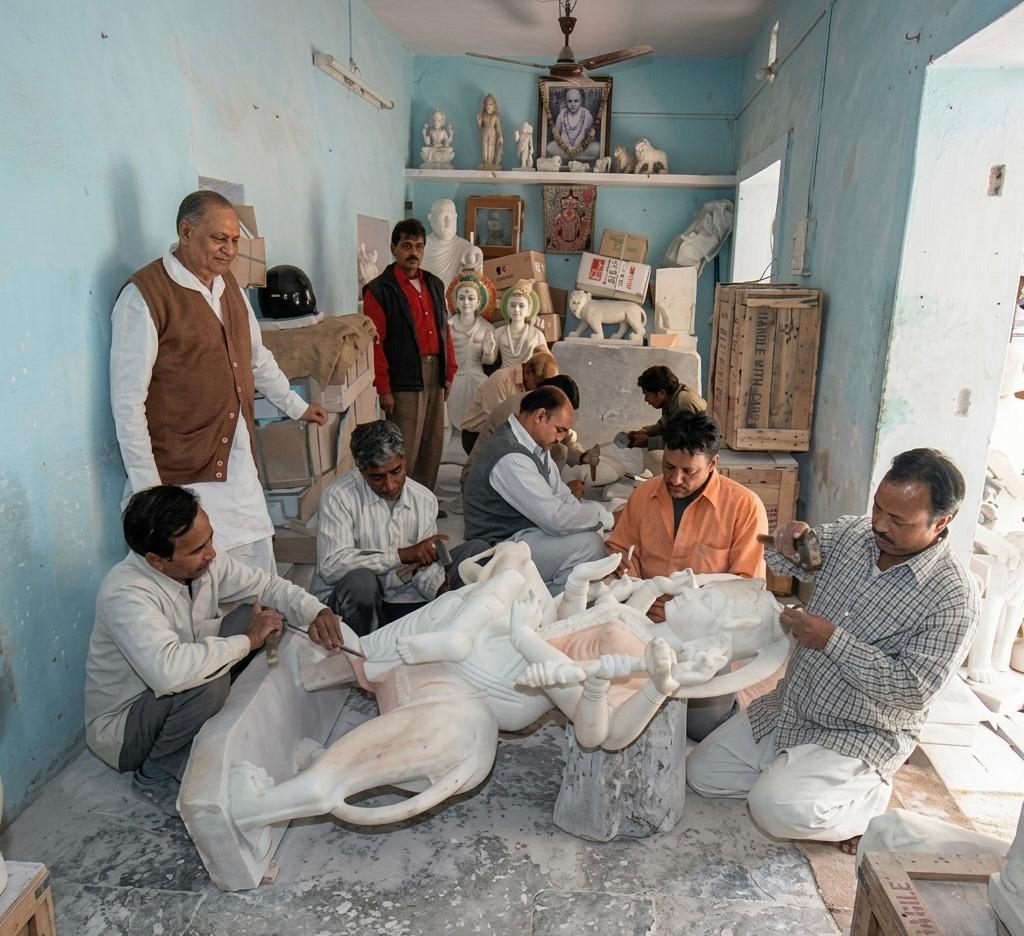
After more than a decade of preparation, Pandit Lallu Prasad Sharma finally established his independent workshop in 1987. The address itself would become sacred to marble artisans across India:
The Original Workshop
Girja Sadan, 1987
Khazane Walon Ka Rasta, Badmunje Ki Gali
Jaipur, Rajasthan, India
Today, the flagship showroom of the institution he founded stands at B-149, Khazane Walon Ka Rasta — still in the same historic lane, still creating sculptures with the same traditional purity, using premium Makrana marble alongside exquisite modern detailing.
A Historic Legacy — Serving Art Since 1950
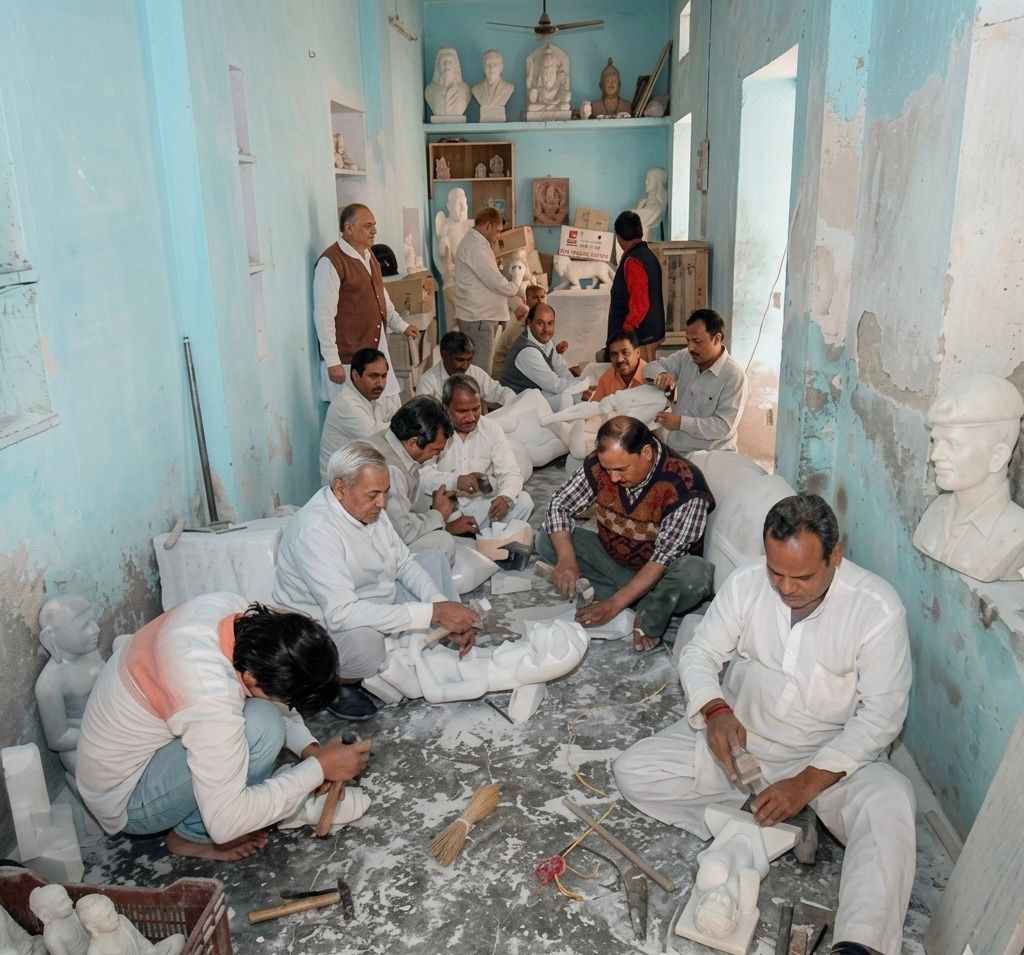
Today, the institution established by Pandit Lallu Prasad Sharma ‘Prithvipura Wale’ is globally recognized as a premier marble moorti manufacturer. Since 1950, this firm has been dedicated to the service of art — a legacy that predates the founding date of the modern workshop itself, reaching back into the family tradition that shaped Pandit ji.
Sculptures are still crafted here with the same traditional purity, using premium Makrana marble, hand-carved by artisans trained in the ancient methodology, then finished with the exquisite gold detailing and mineral pigment work that has become the signature of the studio.
The Adi Gaur Brahmin Murti Samaj — Keepers of Tradition
This glorious journey belongs not only to one man but to the entire Adi Gaur Brahmin Murti Samaj — a community that has nurtured this handicraft for thousands of years with their blood and sweat. To understand Pandit Lallu Prasad Sharma is to understand the community that formed him.
This society serves as the foundation upon which the majestic edifice of Indian sculpture stands. Its members are not merely artisans; they are Shilpi Brahmins — twice-born practitioners of a sacred craft, bound by iconographic canons handed down through generations, by proportions codified in Shilpashastra texts millennia old, and by rituals of purity that surround every stage of sculpting a divine form.
- ♦ Ancient rules preserved — every deity’s proportions, mudras, ayudhas (weapons), and vahanas (mounts) correct per scripture
- ♦ Ritual purity — sculpting divine forms is treated as a spiritual practice, not a job
- ♦ Generational transmission — techniques passed from father to son, guru to shishya, in an unbroken lineage
- ♦ Guardians of Sanatan iconography — ensuring that Ram, Krishna, Ganesha, Shiva, Durga live in stone the way scriptures describe them
It is through the unwavering dedication of the Adi Gaur Brahmin Murti Samaj that the ancient rules and purity of this craft remain alive today. Pandit Lallu Prasad Sharma was one of this community’s brightest stars — but his light illuminates the entire samaj that raised him.
Iconic Masterpiece #1 — Ekta Vriksh (The Unity Tree)
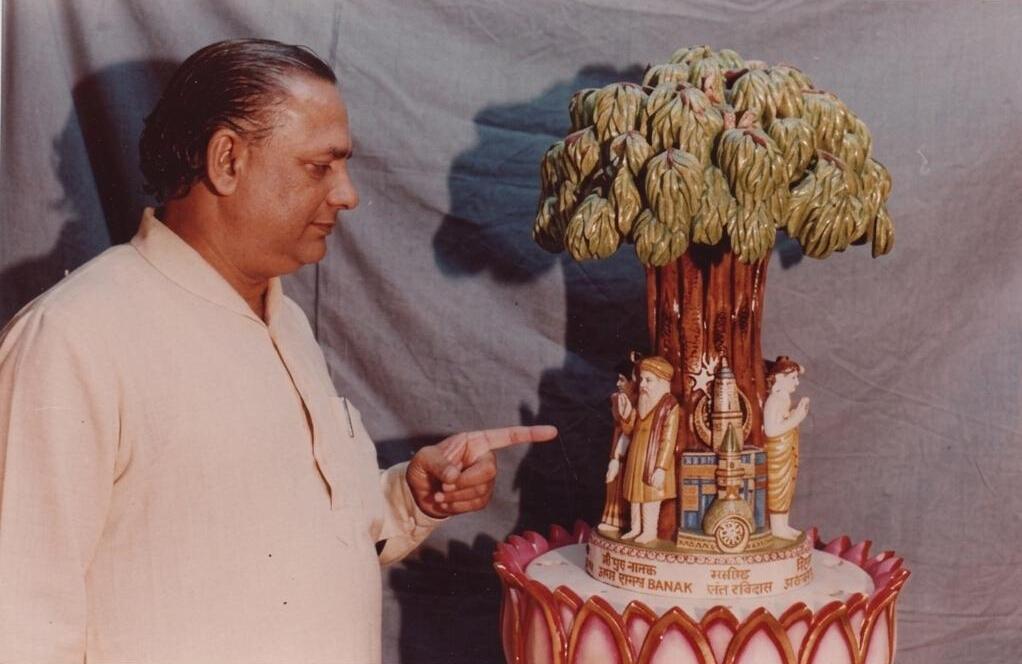
In the early 1990s, during a period of intense communal tension in the country, Pandit Lallu Prasad Sharma created an extraordinary sculpture whose message rose above ideology, above religion, above the divisions of the moment. He called it ‘Ekta Vriksh’ — the Unity Tree.
Carved from a single piece of stone over three continuous years, this 21-inch masterpiece depicts six of the world’s greatest spiritual traditions dwelling together under the shade of a single Kalpavriksha — the wish-fulfilling tree of Indian mythology:
- ♦ Lord Ram & Devi Sita — the ideal of righteous dharma
- ♦ Guru Nanak Dev Ji — the light of Sikh devotion
- ♦ Jesus Christ — the shepherd of Christian love
- ♦ Gautam Buddha — the enlightened one of compassion
- ♦ Mahavir Swami — the great Jain teacher of non-violence
- ♦ Mecca-Madina — the sacred symbol of Islamic faith
Three years. One stone. Six traditions. Ekta Vriksh stands as a living symbol of India’s promise: ‘Unity in Diversity’. In a moment when the country was fracturing along religious lines, one Brahmin sculptor in a Jaipur workshop answered the noise with a quiet meditation carved in marble — a plea for the harmony that his tradition had always known was possible.
Iconic Masterpiece #2 — Jaipur Darshan
Where Ekta Vriksh spoke to the soul of India, Jaipur Darshan was Pandit ji’s love letter to his adopted home. On a single piece of stone, he set out to immortalise the grandeur of the Pink City that had raised him as an artist.
For months, Pandit ji travelled across Jaipur with a sculptor’s eye. He studied the graceful sandstone geometry of Amer Fort, the vermillion majesty of Govind Dev Ji Temple, the honeycomb intricacy of Hawa Mahal. He walked its streets and watched its people. He did not just carve monuments — he carved the very life of old Jaipur:
- ♦ Horse-carriages (tangas) clip-clopping through narrow bazaars
- ♦ Cycle-rickshaws weaving between elephants and pedestrians
- ♦ Women carrying water pots on their heads with characteristic grace
- ♦ The entire social fabric of a Jaipur that was already fading — captured before it vanished
Jaipur Darshan is not just a sculpture — it is an ethnographic document, a love song in stone, and a record of a city’s heart. This masterpiece was a key highlight in his selection for the prestigious Shilp Guru award.
Awards & National Recognition
Recognition of Pandit Lallu Prasad Sharma’s craftsmanship came at the highest levels of national honour. Each award was a milestone; together, they placed him in the pantheon of India’s greatest living artisans.
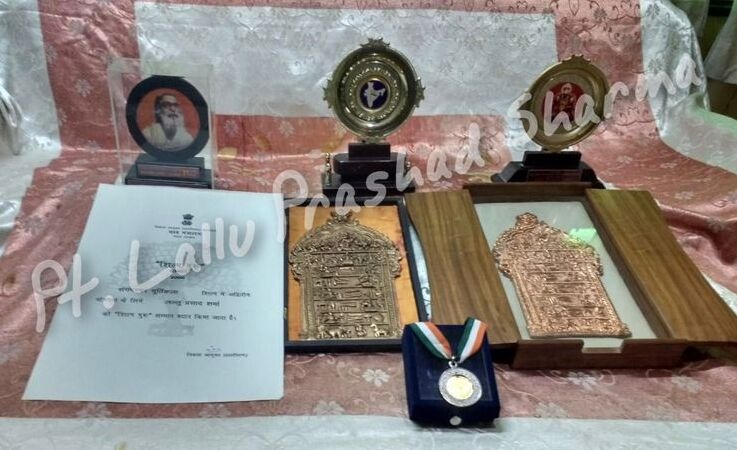
1. National Award
Conferred by the Government of India for his outstanding contribution to the field of sculpture. The National Award recognises artisans whose work has set the benchmark for their craft in the country — a distinction reserved for a select few in each generation.
2. Gold Medal (Ministry of Textiles, Government of India)
A further recognition from the Ministry of Textiles, awarded for exceptional craftsmanship in handicrafts. The Gold Medal is the highest handicraft honour the Ministry bestows, and its receipt cemented Pandit ji’s standing as a national treasure of the art.
3. Shilp Guru Award (2008) — The Highest Honour
The Shilp Guru Award is the highest honour that can be bestowed on any Indian handicraft master. It is not merely a recognition of skill — it acknowledges an artisan whose work has become the reference standard for their craft, whose techniques will be taught to future generations, whose life itself has become an institution.
In 2008, Pandit Lallu Prasad Sharma received the Shilp Guru Award — and from that moment onward, he was known throughout India and internationally as ‘Shilp Guru Pandit Lallu Prasad Sharma Prithvipura Wale’. The title itself was the recognition: guru of sculpture. Teacher of the art itself.
Complete List of Recognitions
- ♦ Shilp Guru Award — Government of India (2008)
- ♦ National Award — Government of India
- ♦ Gold Medal — Ministry of Textiles, Government of India
- ♦ Presidential Award (1991) — Honoured by the President of India
- ♦ National Media Recognition (1992) — Featured in leading newspapers
- ♦ Heritage Artisan Recognition (1985) — For preserving traditional techniques
A Timeless Legacy — The Fourth Generation
Today, the sacred legacy of Shilp Guru Pandit Lallu Prasad Sharma is carried forward through PLPS Art Gallery by the fourth generation of his family. The chisels have been passed. The mantras of ritual purity have been recited over new hands. The proportional canons of Shilpashastra live on in the fingertips of his descendants.
More than 50 skilled artisans work at PLPS Art Gallery today, all trained in the traditional techniques Pandit ji perfected. Every marble moorti, murti, and statue that leaves the workshop carries his lineage — the same standards, the same devotion, the same insistence on hand-carved authenticity without shortcuts, without machines, without moulds.
This tradition remains a testament to the discipline and mastery of the Adi Gaur Brahmin Murti Samaj. It is proof that a great artist does not simply create works — a truly great artist creates a way of working that outlives them, and passes into the hands of everyone they have taught.
The life of Shilp Guru Pandit Lallu Prasad Sharma ‘Prithvipura Wale’ and the dedication of the Adi Gaur Brahmin Murti Samaj stand as an eternal pillar of Indian culture — showing the world the path of art, of harmony, and of unbroken tradition for the centuries to come.
Experience His Legacy — Featured Sculptures
Every sculpture at PLPS Art Gallery is carved in the tradition Pandit ji established. Bring home a piece of that living legacy:
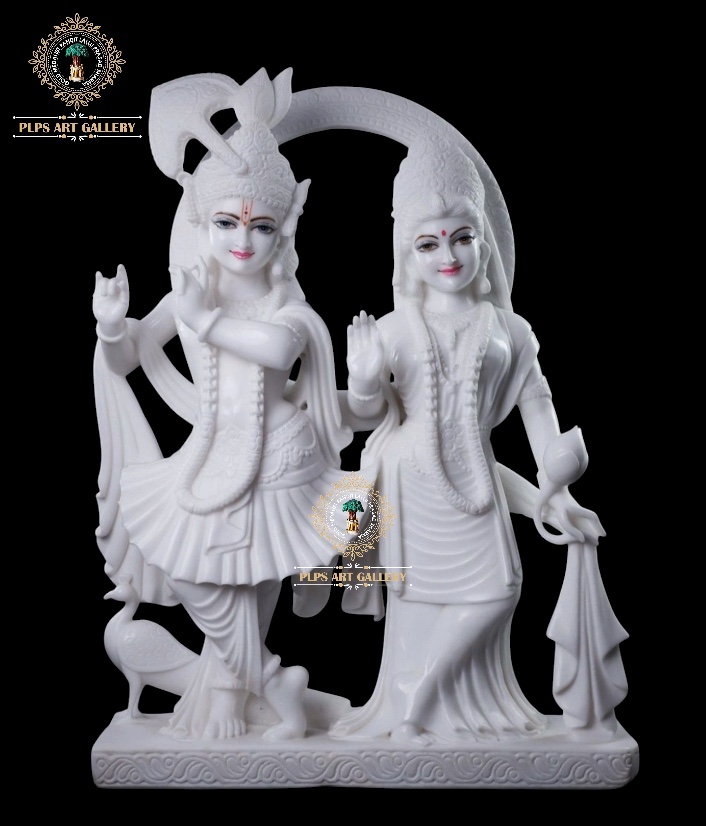
Makrana Marble Radha Krishna Jugal Jodi
Classical divine pair in Makrana marble — the signature form.
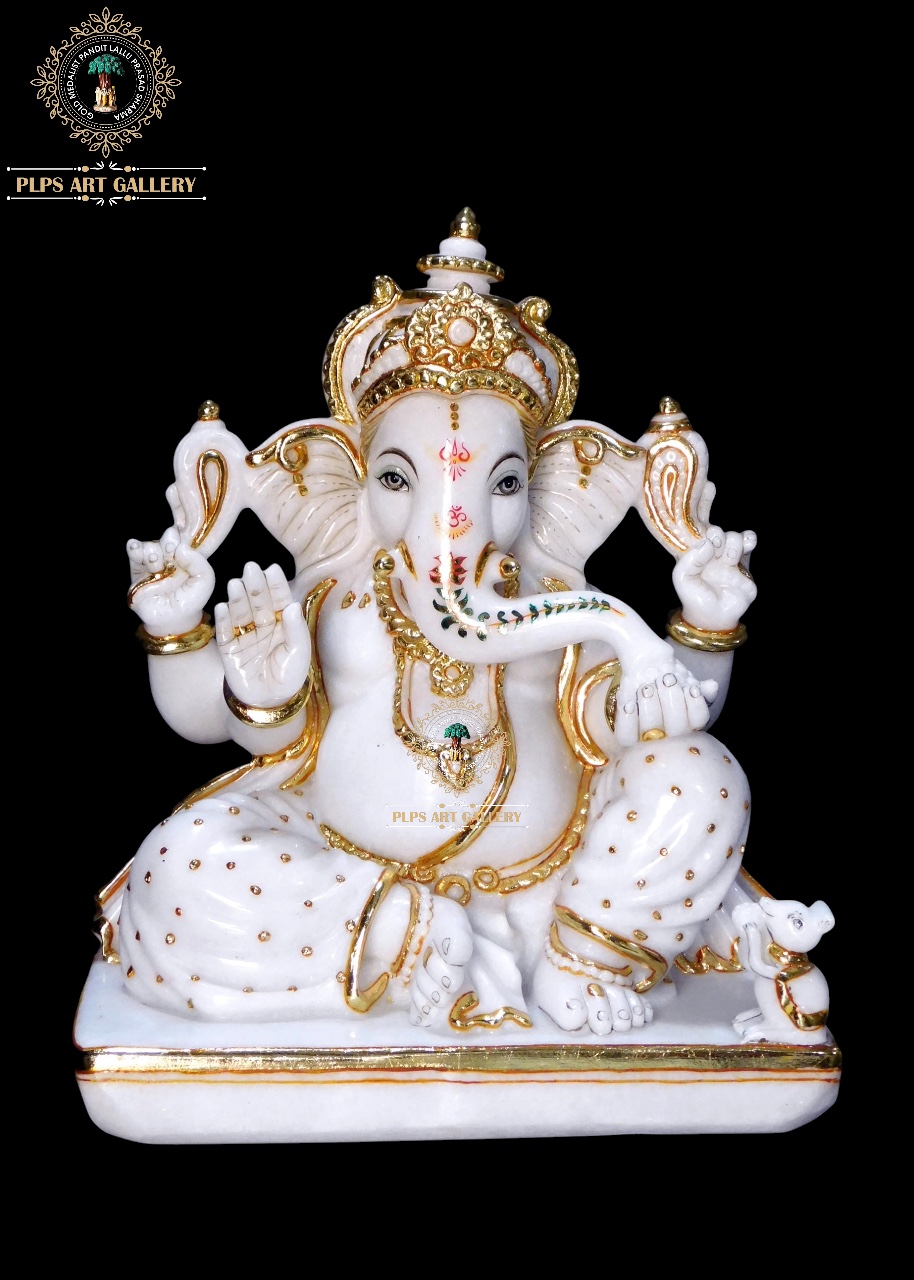
Shubh Vinayaka Ganesha
Seated Makrana marble Ganpati with elegant gold detailing.
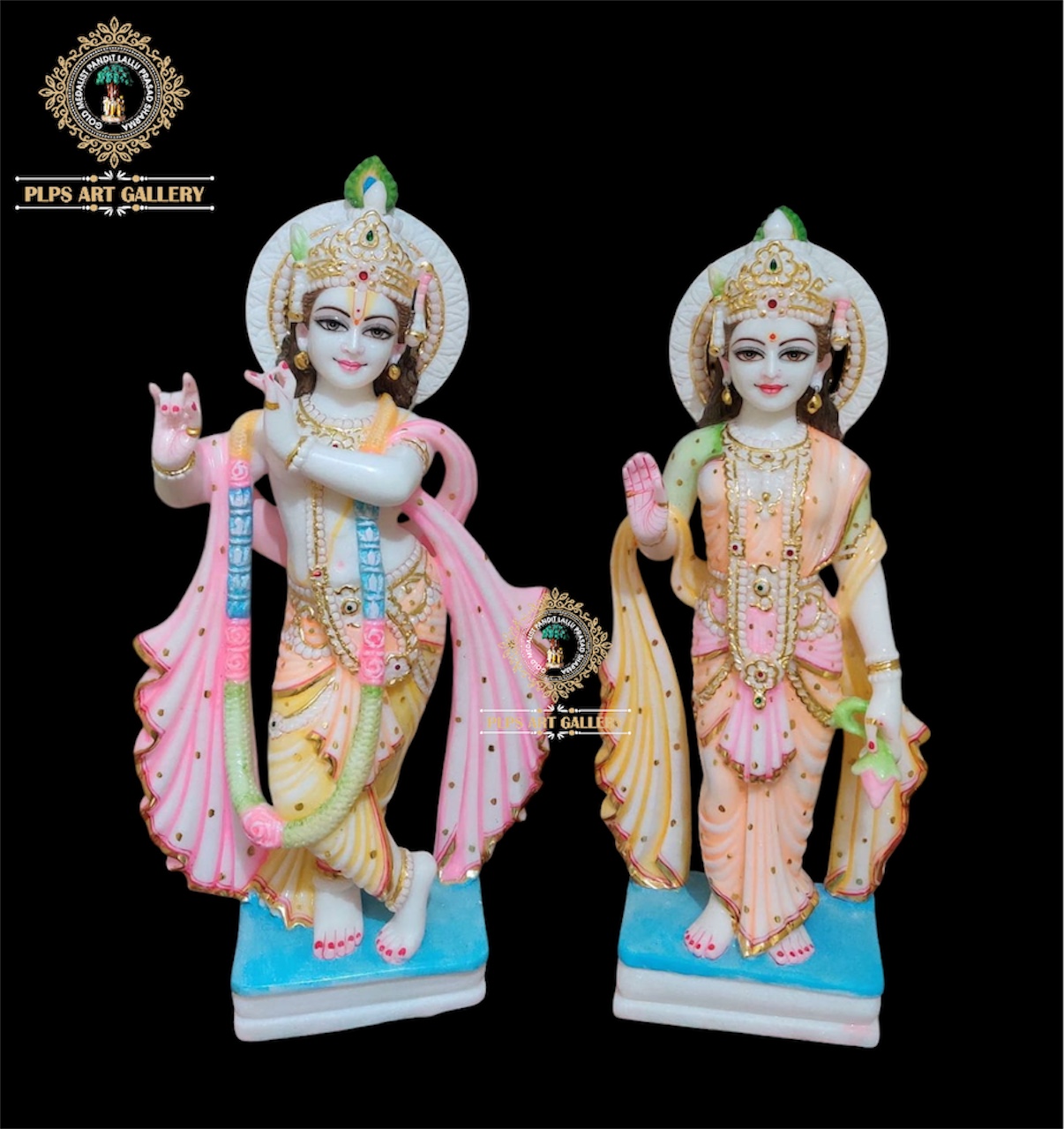
Swarna-Kanti with Real Gold
Soft pastel hues plus real gold-leaf detailing.
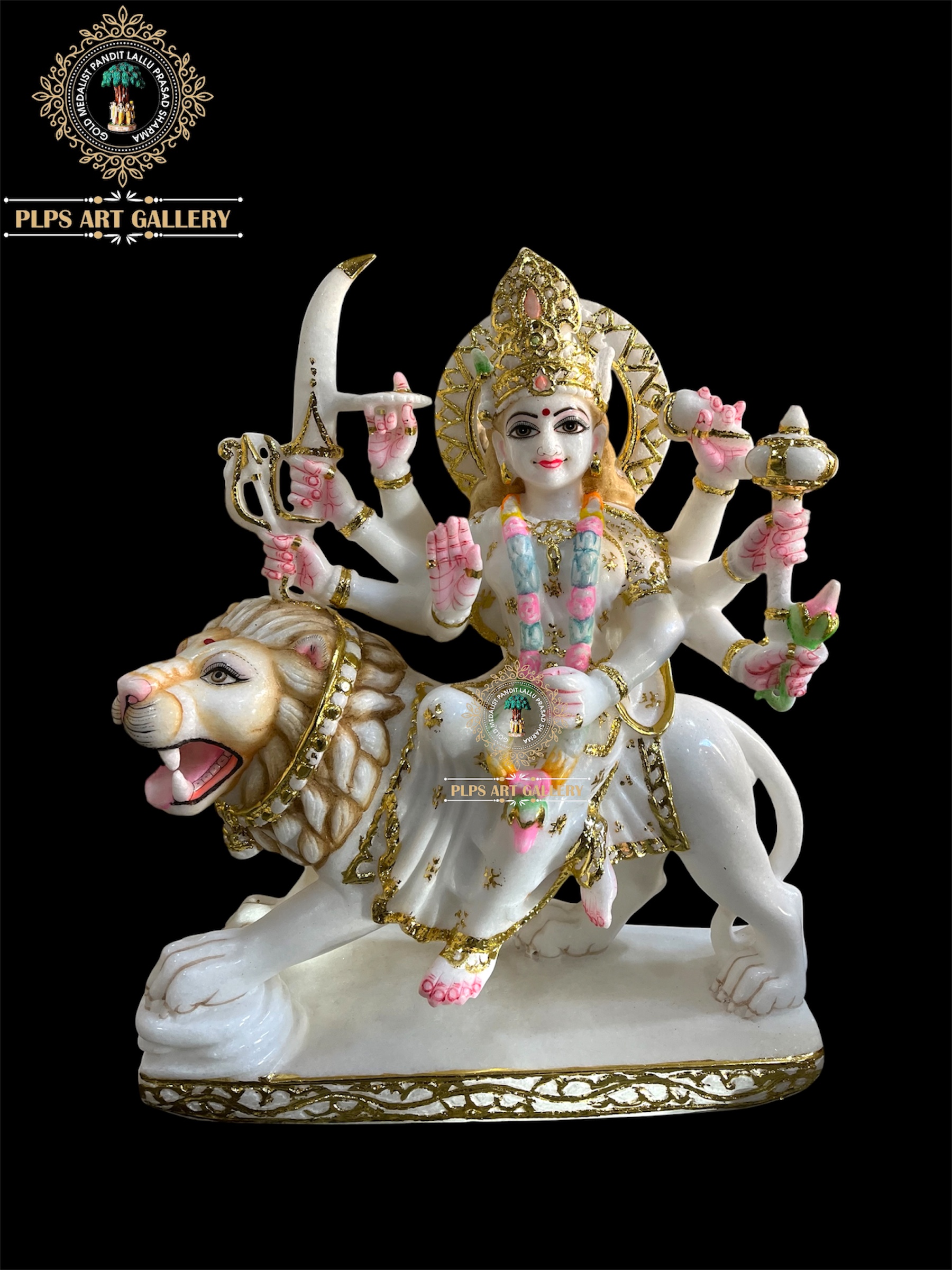
Makrana Marble Durga Maa
Handcrafted Durga Maa — Ashtabhuja mastery in stone.
Continue His Legacy in Your Home
Every sculpture at PLPS Art Gallery is hand-carved by the fourth generation of the family Pandit ji founded — using the same Makrana marble, the same techniques, the same devotion.
Explore Our Collection Visit Our Jaipur WorkshopFrequently Asked Questions
Who was Pandit Lallu Prasad Sharma?
Shilp Guru Pandit Lallu Prasad Sharma ‘Prithvipura Wale’ was one of India’s most celebrated marble sculptors of the modern era. Born in 1938 in Prithvipura village, Rajasthan, he became a master of traditional Indian marble sculpture, received the highest national honours including the Shilp Guru Award, and founded the institution now known as PLPS Art Gallery, which continues under his fourth-generation family.
What is the Ekta Vriksh (Unity Tree) sculpture?
Ekta Vriksh is a 21-inch marble sculpture carved by Pandit Lallu Prasad Sharma from a single piece of stone over three years in the early 1990s. It depicts Lord Ram-Sita, Guru Nanak Dev Ji, Jesus Christ, Gautam Buddha, Mahavir Swami, and the symbol of Mecca-Madina together under the shade of a Kalpavriksha (wish-fulfilling tree). It stands as a symbol of India’s ideal of ‘Unity in Diversity’ and was created as a response to communal tensions of that period.
What is Jaipur Darshan?
Jaipur Darshan is Pandit ji’s tribute to the city of Jaipur, carved on a single piece of stone. It depicts the architectural marvels of Amer Fort, Govind Dev Ji Temple, and Hawa Mahal alongside scenes of old Jaipur life — horse carriages (tangas), rickshaws, and women carrying water pots. This masterpiece played a key role in his selection for the Shilp Guru Award.
What awards did Pandit Lallu Prasad Sharma receive?
He received the highest national honours in Indian handicrafts: the Shilp Guru Award (2008), the National Award from the Government of India, the Gold Medal from the Ministry of Textiles, the Presidential Award (1991), National Media Recognition (1992), and Heritage Artisan Recognition (1985). The Shilp Guru title is the pinnacle of honour for any Indian master craftsman.
What is the Adi Gaur Brahmin Murti Samaj?
The Adi Gaur Brahmin Murti Samaj is a traditional community of Shilpi Brahmin artisans who have practised sacred sculpture in India for thousands of years. Members are bound by iconographic canons derived from Shilpashastra texts, strict rituals of purity while sculpting divine forms, and unbroken generational transmission of technique. Pandit Lallu Prasad Sharma was one of the community’s brightest lights — but the whole samaj is the true keeper of this tradition.
Where is PLPS Art Gallery located today?
The flagship workshop and showroom of PLPS Art Gallery is at B-149, Khazane Walon Ka Rasta, Chandpole Bazar, Jaipur, Rajasthan 302001 — on the same historic lane where Pandit ji established his workshop in 1987. Visitors can watch the fourth generation of master artisans continue his tradition in person. Contact us to schedule a visit.
Who continues Pandit ji’s legacy today?
The fourth generation of Pandit ji’s family carries the legacy forward through PLPS Art Gallery, supported by more than 50 skilled artisans trained in the traditional techniques he perfected. Every marble moorti, murti, and statue that leaves the workshop is hand-carved using the same methodology — no machines, no moulds, no resin, no shortcuts. Explore our current collection to see the living tradition.
Can I commission a custom marble sculpture in Pandit ji’s tradition?
Yes. Custom commissions are our specialty and follow the exact traditional methodology Pandit ji established. You can specify deity, size, marble type (Makrana, Vietnam, Bhainslana and others), ornamentation style, and any specific iconographic requirements. Typical delivery timelines are 30–60 days depending on complexity. Larger temple installations may take longer. Get in touch with our team to begin.
Contact Us — PLPS Art Gallery
If you would like to know more about our craftsmanship, Makrana marble sculptures, or our glorious heritage — the legacy of Shilp Guru Pandit Lallu Prasad Sharma ‘Prithvipura Wale’ — you can connect with us through any of the following channels:
Showroom Address
PLPS Art Gallery Pandit Lallu Prasad Sharma
B-149, Khazane Walon Ka Rasta
Chautha Chauraha, Near Krishna Bakery
Chandpole Bazar, Jaipur
Rajasthan – 302001, India
Mobile Numbers
Website & Enquiries
Walk into our Jaipur showroom to witness the living tradition of Shilp Guru Pandit Lallu Prasad Sharma — where the fourth generation of master artisans continues to hand-carve every marble moorti with the same devotion, purity, and craftsmanship perfected since 1950.