
Home mandir temple
A home mandir is the spiritual anchor of an Indian household — the one architectural feature that transforms a room into a sacred space. Installing individual statues on a shelf is worship; commissioning a dedicated marble temple structure to house those deities is consecration. A properly carved Makrana marble mandir outlasts the home it sits in, becoming an heirloom that passes through three or four generations, its Vastu-aligned proportions channelling positive energy long after the artisan's chisel has been set down.
At PLPS, mandir carving is treated as its own discipline, distinct from statue work. The jaali (lattice) screen is the most technically demanding element — each perforation is hand-drilled and chased from both faces so light and incense smoke pass through cleanly, without a single fractured edge. Our carvers shape gopuram tiers, fluted pillars, and toran arches in Makrana (the densest, most premium quarry, same source as the Taj Mahal), Vietnam White (a softer stone better for deep relief), or Bhainslana (for dramatic dark accents on base and finials). Four generations of specialisation since 1950.
Vastu Shastra is specific about mandir placement. The Ishaan (North-East) corner of the home is the prescribed location; the mandir itself should face East or North, with deity idols oriented so worshippers look East during aarti. Avoid shared walls with bathrooms, bedroom headboards, or the underside of a staircase — all of which drain the sanctity of the shrine. The base (peeth) must be elevated so the principal deity sits at chest height when the devotee kneels, and the ceiling above the murti's head must be clear.
PLPS mandirs range from 12-inch wall-mounted units for apartment kitchens to six-foot floor-standing shrines with domed shikhara and multiple garbha chambers. We customise width to fit existing wall alcoves, adjust chamber count for single-deity or family darbar configurations, and offer a choice between the tiered South Indian gopuram and the curved North Indian shikhara. Jaali patterns, kalash finial count, gold-leaf swarna karya on pillars and arches, and step-carved bases are all specified per commission — nothing is stock.
Custom marble mandirs are hand-carved over 45 to 90 days depending on scale and jaali density. Share your room dimensions and deity list with our Chandpole workshop and we will draft a proportioned design.

Frequently Asked Questions
For a 2 or 3 BHK apartment, a wall-mounted or table-top mandir between 12 and 30 inches tall works best — it holds one or two deities and fits within a wall niche or on a low cabinet. For a duplex or bungalow with a dedicated puja room, a floor-standing mandir of 3 to 5 feet accommodates a family darbar; larger 5 to 6 foot mandirs suit joint families and heritage homes. Always leave six inches of clearance above the tallest deity's crown, and keep the base elevated so the principal murti sits at chest level when kneeling.
Vastu Shastra prescribes the Ishaan (North-East) corner of the home as the ideal location for a puja room and mandir. The mandir opening should face East so the devotee looks East during aarti; North is the acceptable second choice. Avoid placing the mandir against a wall shared with a bathroom, above or below a staircase, or on the wall behind a bed. The deity idols themselves must face East or West — never South. Elevate the base so the principal murti sits at chest level when the devotee is seated, and never place the mandir directly on the floor.
A jaali design is significantly harder to carve — each perforation is hand-drilled from both faces without chipping the surrounding stone — but the result is unmatched. Light passes through the screens, incense smoke ventilates naturally instead of pooling around the deities, and the play of shadow adds depth to the shrine. A solid mandir is easier to dust and slightly stronger structurally, making it the choice for very large multi-deity shrines. Most PLPS clients opt for jaali on the side walls and gopuram tower with a solid rear panel, which balances beauty, airflow, and structural integrity.
Makrana is the traditional first choice — the same quarry that supplied the Taj Mahal. It is dense, resists yellowing over decades, and takes a chikni polish that lasts a century. Vietnam White is softer and slightly less expensive; its workability suits deep relief and fine jaali, though it needs sealing in humid climates. Bhainslana has a dense black tonality that we use on the base, kalash finials, and pillar caps for striking contrast to accent a white Makrana body. All three are hand-carved by our fourth-generation artisans at our Chandpole workshop; the choice comes down to budget and finish preference.
The choice usually follows family tradition and the primary deity. A gopuram is the tiered, pyramid-shaped tower of Dravidian temple architecture — well suited to Balaji, Murugan, or Ayyappa shrines, and to homes with taller puja room ceilings. The shikhara is the curved, upward-tapering tower of Nagara-style North Indian temples — a natural fit for Ram Darbar, Krishna, Shiva, and Devi shrines. PLPS carves both styles to scale, matching pillar and jaali proportions accordingly. If you are undecided, share the primary deity's name and room height, and we will recommend the traditionally correct silhouette for your commission.
Dust the mandir daily with a soft microfibre cloth; skip feather dusters as their quills can scratch the chikni polish. For weekly cleaning, wipe with a barely damp cloth and dry immediately — never leave standing water on carved surfaces or inside jaali openings. Avoid vinegar, lemon, and any acidic household cleaner; they permanently etch marble. For diya oil marks or ghee splatter, use a paste of baking soda and water applied with a soft brush, then rinse gently. Reseal every 3 to 5 years with a marble-safe penetrating sealer and it will look new for a century.
Looking for a custom Home mandir temple?
Every piece is hand-carved to order in our Chandpole Bazaar workshop, Jaipur. Share your size, marble type and iconography — our 4th-generation artisans will craft it for you.
Request a Quote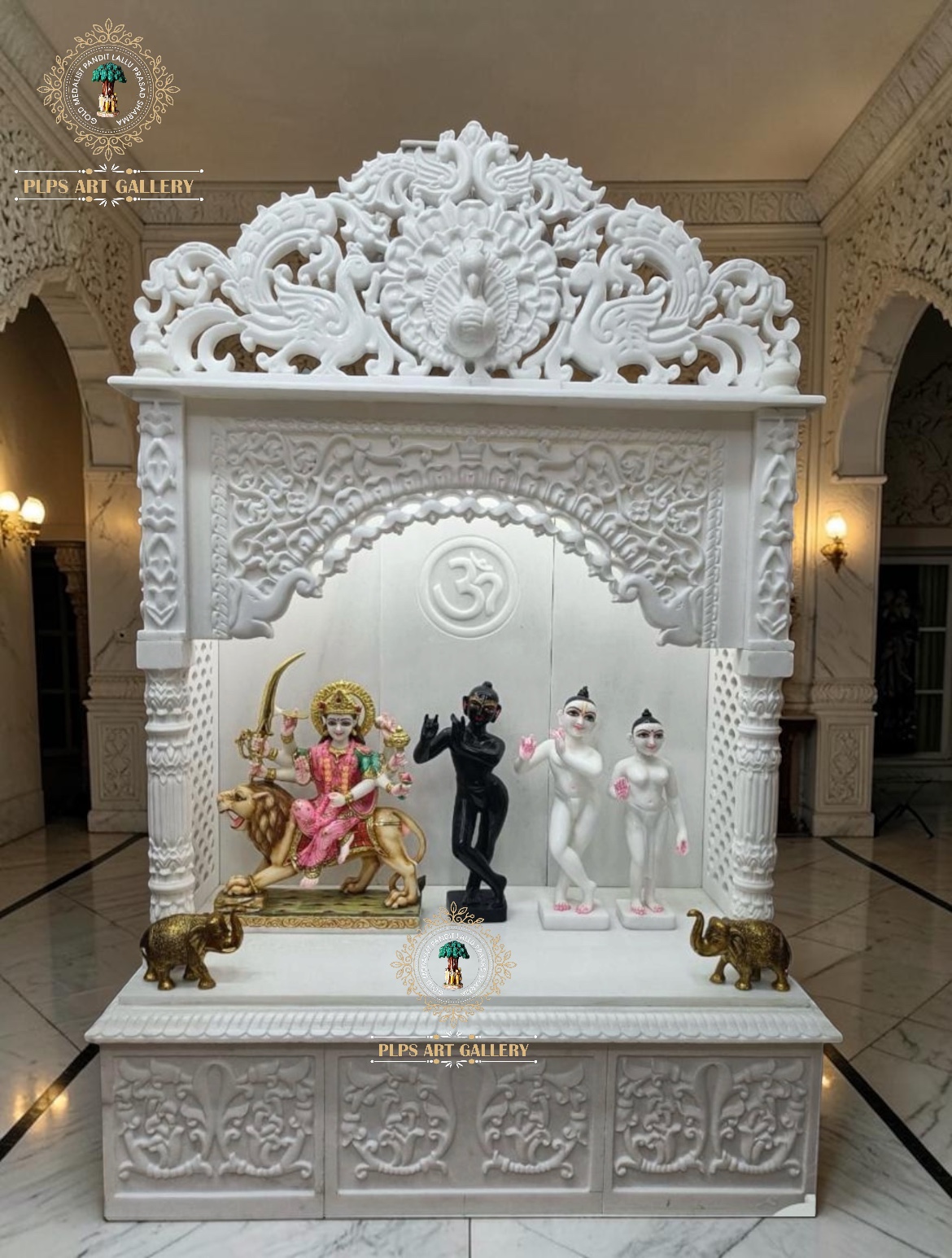
Made-to-Order Only
Our home mandir temple are crafted exclusively on commission. Share your size, marble type and iconography — our fourth-generation artisans will begin your piece at our Chandpole Bazaar workshop, Jaipur.
Start a Commission