Marble Ganesh Murti Manufacturer
Vietnam · Makrana · Bhainslana marble — any size, any form. Handcrafted by the Shilp Guru family in Jaipur.
Every Ganesh we carve begins on a slab of stone, and ends when a family says “yes, this is our Ganesh ji.”
At PLPS Art Gallery, marble Ganesh murtis are not catalogue items. Each piece is commissioned — a family asks for a specific size, a temple committee asks for a matched set of eight, a devotee sends a photograph of a Ganesh their grandfather worshipped and wants it faithfully reproduced. Since 1950, our answer has always been the same: send us a reference, tell us the marble you have in mind, and we will sculpt it by hand at our workshop in Chandpole Bazar, Jaipur.
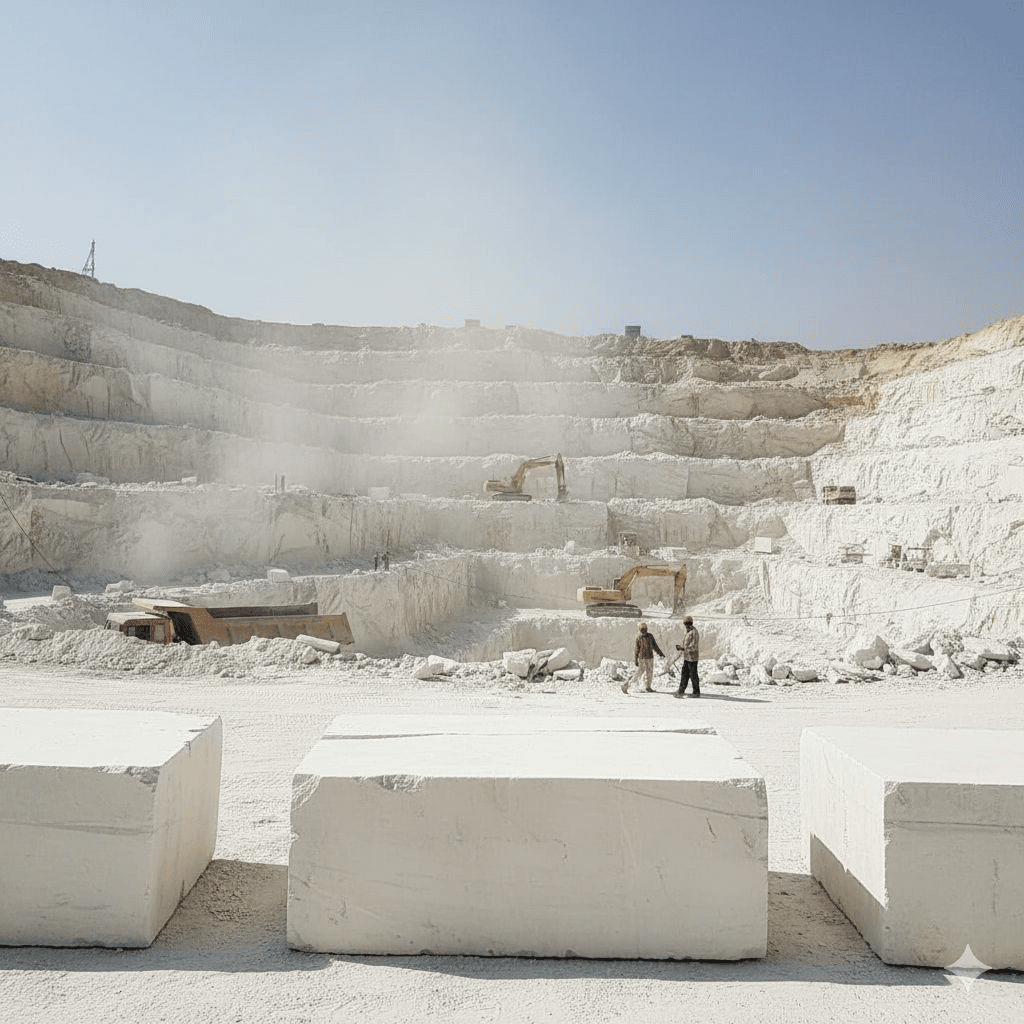
We work primarily in three marbles for Ganesh ji — Vietnam white, the fine-grained stone most preferred for intricate faces and ornaments; Makrana, the warm Rajasthani marble that ages gracefully in a home mandir; and Bhainslana black, our premium statement stone from Nagaur. And if you have a specific marble in mind that is not on this list, tell us — we sculpt in whatever you bring us.
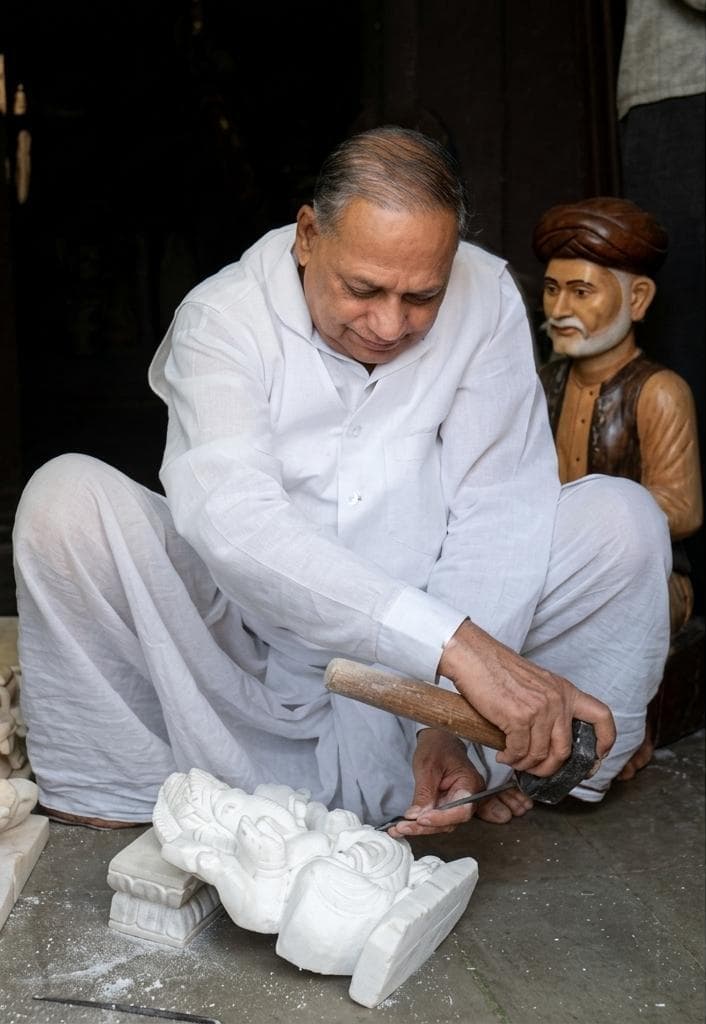
No moulds. No resin. No shortcuts. Just hand, stone, and four generations of the same family.
Three marbles we sculpt Ganesh ji in — and anything else you bring us
The marble you choose changes the character of your Ganesh — how the face reads, how the ornaments catch light, how the piece ages in a mandir. Here's how we think about each.
Vietnam White Marble
Fine, uniform grain that holds intricate carving — the crown, the ornaments, the small mushak at the feet — without chipping. Its purity of white is why Ganesh ji made in Vietnam marble is our most requested piece. When you send us a Dagdusheth or Siddhi Vinayak reference with rich detail, Vietnam marble is what we reach for first.
See our Vietnam Ganesh Collection →Makrana Marble
Warm off-white, softly veined — the same Rajasthani stone used in the Taj Mahal. Makrana Ganesh ji ages gracefully in a home mandir; the colour deepens ever so slightly with lamp smoke and years of oil, which is why Makrana pieces feel more inherited than bought. Ideal for families setting up a permanent puja room.
Explore Makrana marble guide →Bhainslana Black Marble
Premium black marble quarried in Nagaur district, Rajasthan — deep, dense, and slow-carved. Bhainslana Ganesh is chosen for specific traditions and for those who want a Ganesh ji that anchors a room. The stone polishes to a mirror finish that catches lamp light like nothing else.
See Bhainslana pieces →Every form of Ganesh ji — the way your family remembers him
Send us a photograph, name a temple, or describe the Ganesh you grew up worshipping. We've carved every regional style below, and many more not listed here.
Siddhi Vinayak
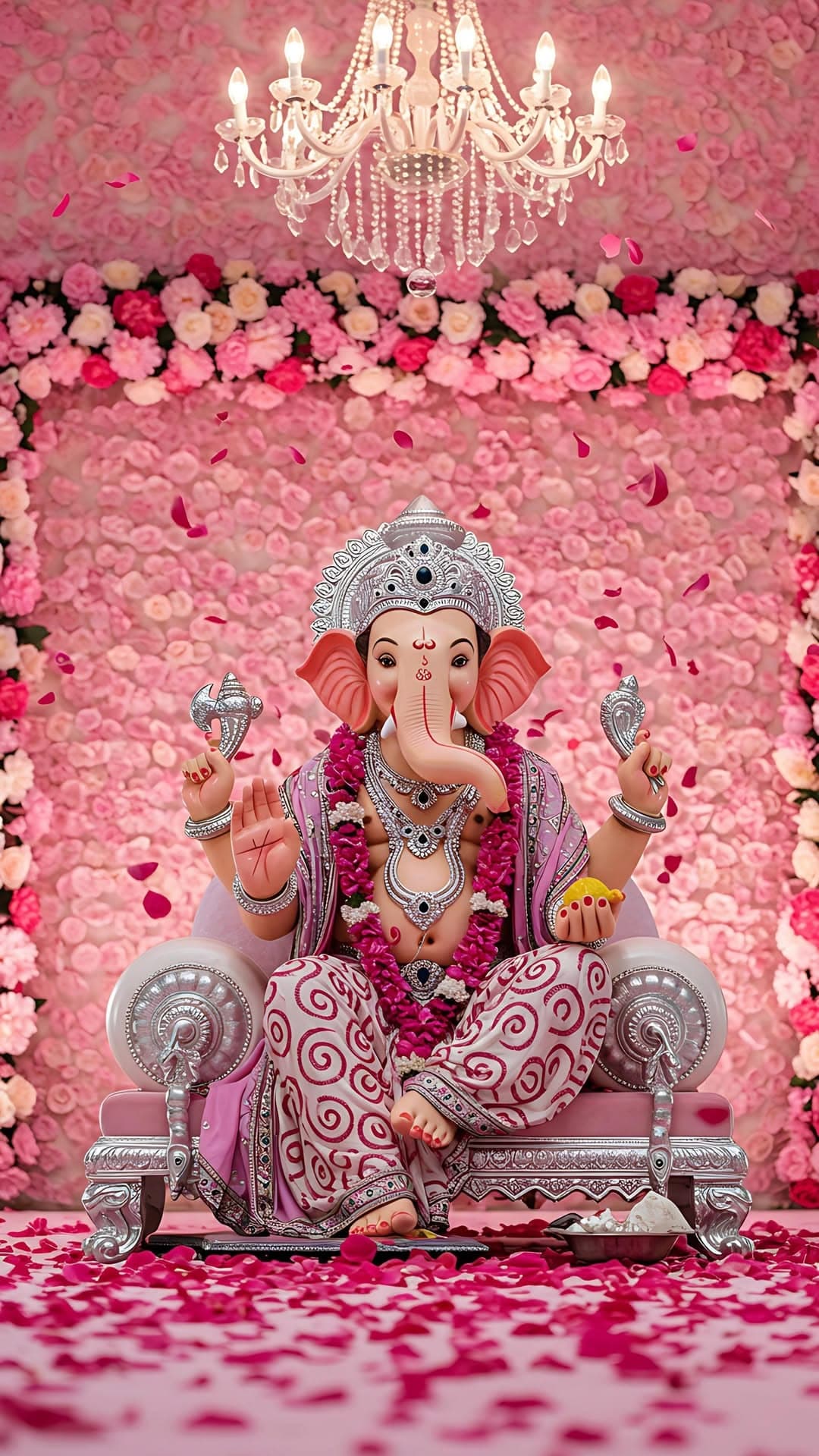
The Mumbai-style Ganesh — right trunk, seated on lotus with Riddhi Siddhi. Regularly commissioned by families with roots in Maharashtra.
Dagdusheth Halwai Ganesh
The Pune festival Ganesh recreated in marble — jewelled crown, thick garland, expressive gaze. Ornamentation carved in painstaking detail.
Bal Ganesh
The child form — chubby, playful, holding modak. A favourite for gifting, nursery mandirs, and first-time buyers.
Nritya Ganesh (Dancing)
Ganesh in the tandava pose — dynamic, ornamented, ideal for larger home mandirs and reception halls. Technically demanding to carve.
Ashtavinayak Set
The eight sacred forms — Moreshwar, Siddhivinayak, Ballaleshwar, Varadavinayak, Chintamani, Girijatmaj, Vighneshwar, Mahaganapati. Carved as a matched set from the same marble block.
Riddhi Siddhi Ganesh
Ganesh flanked by his two consorts, Riddhi and Siddhi. Elegant symmetric composition — often chosen for wedding and housewarming gifts.
Pagdi / Turban Ganesh
The Rajasthani rendition — Ganesh ji with a turban, softer facial features, a distinctly local iconography. Sold widely from Chandpole Bazar since our grandfather's time.
Vinayagar (South Indian)
The South Indian form — round-faced, seated with modak, temple-style ornamentation. We carve these for temple committees in Tamil Nadu, Karnataka, and the diaspora.
Marble Ganesh pieces from our recent work


Hand-Carved Marble Ganpati Idol

hand carved marble ganesha statue
Three ways to find your Ganesh
Jump straight into the collection that fits what you have in mind — or WhatsApp us and we'll shortlist for you.


From a car dashboard piece to a temple sanctum — we carve any size
Below are the sizes families most often ask us for. If your dimension is not here — share it with us. We haven't said no yet.
Compact travel Ganesh — Vietnam marble holds detail beautifully at this scale.
Popular household size — fits standard mandir shelves and puja rooms.
The statement piece for a hall or reception — proportioned for daily aarti.
Full-size home mandir installations, and community pandals.
For a family-run mandir or a temple courtyard — carved from a single block.
Life-size Ganesh for temple sanctums — includes crane-based installation guidance.
Any size, any proportion. If your marble block allows it, we can carve it.
Eight matched forms carved from the same block for grain and colour consistency.
Left trunk or right trunk? Where should Ganesh ji face?
Two questions almost every family asks us before ordering. Here's what we tell them — the way our grandfather explained it, and the way the shastra records it.
Left-trunk Ganesh (Vamamukhi)
The left-trunk form is associated with the Ida nadi — the cool, lunar, forgiving side. It represents peace, prosperity, and family well-being. Seven of the eight Ashtavinayak idols have left trunks. This is the form we recommend for almost every home mandir.
Right-trunk Ganesh (Dakshinamukhi)
The right-trunk form — the same as the famous Siddhivinayak temple in Mumbai — carries the Pingala nadi, the solar energy. It is ritually powerful but demands strict daily puja discipline. Traditionally kept in temples rather than homes.
Vastu placement — six simple rules
- Place your Ganesh in the Ishaan kona (northeast corner) of your home or puja room.
- The murti should face east or north — never south, which is associated with Yama.
- Eye-level or slightly above is ideal — you should look up at Ganesh ji, not down.
- Avoid placing Ganesh in a bedroom, bathroom, storeroom, or under a staircase.
- Marble Ganesh is a permanent installation — unlike a clay Chaturthi idol, it is not meant for immersion.
- Keep the space clean and lit — daily aarti and a small oil lamp are enough; the murti does its own work.
Six steps — from stone to shrine
No moulds, no resin, no shortcuts. Every marble Ganesh is carved by hand at our workshop in Chandpole Bazar, Jaipur.
You share the vision
Reference photo, temple name, sketch — or just a description. We ask the questions that matter: trunk direction, number of arms, ornaments, throne, backdrop.
We select the marble
Vietnam, Makrana, or Bhainslana — chosen for the piece. We inspect the block for hidden veins that could ruin fine facial carving.
Rough shaping
The block is rough-cut to the Ganesh outline. This is the only stage where a machine touches your murti.
Iconographic carving
By hand, chisel and hammer, the master artisan shapes the trunk, the ornaments, the mushak, the throne. Face is left for last.
The face
The senior sculptor — usually a 4th-generation family member — carves the face and eyes personally. This is what makes a Ganesh feel alive or feel dead.
Polish and delivery
Hand polish to the finish you asked for (matte, semi-gloss, mirror). Reinforced wooden crating. Delivered to your address, insured, with WhatsApp updates every stage.
Pieces that go with a marble Ganesh
Most families who order a Ganesh from us also ask about one of these — a mandir to house it, a singhasan under it, a companion deity, or a backdrop panel. All carved in the same workshop.


Three reads that help you decide
Short, honest guides written by our family — for anyone about to bring a marble Ganesh home.

What families ask us before ordering
For Ganesh ji, Vietnam white marble is our most requested — its fine uniform grain holds intricate carving on the crown, ornaments, and the mushak at Ganesh ji's feet without chipping. Makrana marble is the traditional choice — the warm Rajasthani stone used in the Taj Mahal, ideal for a home mandir that will age gracefully. Bhainslana black is our premium statement stone from Nagaur. We can carve Ganesh in any other marble too — just tell us.
For a home mandir, we recommend a left-trunk (Vamamukhi) Ganesh — associated with peace, cool energy, and Ida nadi. A right-trunk (Dakshinamukhi) Ganesh — the form seen at Siddhivinayak Temple in Mumbai — carries powerful Pingala/solar energy and traditionally demands strict daily puja discipline, which is why it is kept in temples rather than homes. Seven of the eight Ashtavinayak idols have left trunks.
Any size. From small car dashboard idols to life-size temple installations. Popular home sizes are 12 inches (mandir shelf), 1 feet, 2 feet, and 3 feet. There is no fixed upper limit — the constraint is the marble block, and Makrana and Vietnam quarries supply blocks large enough for almost any commission.
Yes. We regularly carve the eight Ashtavinayak forms as a matched set and individually — Moreshwar, Siddhivinayak, Ballaleshwar, Varadavinayak, Chintamani, Girijatmaj, Vighneshwar, and Mahaganapati. We also do Siddhi Vinayak Mumbai style and the authentic Dagdusheth Halwai Ganesh with the correct ornamentation. Send us a reference photograph on WhatsApp and we will match it faithfully.
A typical 1-3 feet custom marble Ganesh takes 30 to 60 days from design approval. Life-size pieces (5-6 feet) or heavily detailed pieces like a Dagdusheth replica or an Ashtavinayak set take 90 to 120 days. Every major stage — rough shaping, carving, facial detail, polish — we share on WhatsApp so you know exactly where your Ganesh is.
The Ishaan kona (northeast corner) is ideal, with the idol facing east or north. Eye-level or slightly above is preferred. Avoid the south direction (associated with Yama), and never place the murti in a bedroom, bathroom, storeroom, or under a staircase. A marble murti is a permanent installation — unlike a clay Chaturthi idol, it is not meant for immersion.
Yes — regularly. Common destinations include the United States, United Kingdom, Canada, Australia, UAE, Singapore, Malaysia, and much of Southeast Asia. Every piece is packed in reinforced wooden crating with corner cushioning and insurance, and we handle the export documentation. WhatsApp us your city and we will share a delivered-to-door timeline.
Yes — this is one of our most common commissions. Send us photographs of the reference (a specific temple, a family Ganesh, a printed image, or a sketch) and we will confirm every iconographic detail — trunk direction, number of arms, ornaments held, throne style, mushak positioning — before carving begins. Every major stage is shared on WhatsApp for your approval.
Ready for a Ganesh that will be in your family for generations?
Send us a reference photograph, a temple name, or just describe the Ganesh you have in mind. Tell us the marble and the size — we'll do the rest, the way we've been doing it since 1950. WhatsApp updates at every carving stage, so you know exactly where your Ganesh is.
Paldi House, Chandpole Bazar, Jaipur — 15 minutes from Jaipur Junction