
Human Bust statue
Human bust sculpture in marble occupies a distinct territory from deity moortis and named-personality portraits. Non-devotional and non-commemorative, drawn from classical human forms — a mother cradling her child, a seated dancer at rest, the abstracted thinking-man, an anonymous torso in Chikni polish — these pieces enter homes and public rooms as art, not worship. The market is different too: interior designers styling boutique hotels, private collectors curating a living room, hospitality brands appointing spa foyers and wellness centres, luxury residences where the sculpture reads as an heirloom rather than a shrine.
Carving an artistic human bust is not easier than carving a portrait; it is different work. Where a portrait answers to a photograph, an anonymous classical figure answers to anatomy, proportion and the sculptor's own aesthetic imagination — the balance of head on neck, the way skin drapes over collarbone and shoulder. PLPS Art Gallery — four generations of Jaipur Shilpis beginning with Late Pandit Lallu Prasad Sharma (Shilp Guru, Presidential Award 1991) — brings the same Shila Pariksha, Rekhankan and Chikni discipline we reserve for portrait commissions to these purely artistic subjects. Makrana marble's fine grain and faint natural translucence suit classical human anatomy in a way granite or resin never can.
Popular forms include the Mother-and-Child (Mata-Putra) study — the universal composition that ends up above fireplaces and in hospitality lobbies more often than any other; classical dancer figures in Odissi tribhanga and Kathak postures; the seated thinking-man form adapted from Western contemplative sculpture; abstract busts stripped to essential mass; and standalone torso studies in the classical Greek tradition. Their homes are luxury living rooms, hotel lobbies and lounge landings, art galleries, spa reception areas, and the pedestal alcoves of high-end boutique retail interiors.
PLPS carves human bust sculpture from 8-inch shelf studies to four-foot floor-standing figures. The most-requested decorative range is 12 to 24 inches — a scale that anchors a console table or bookshelf without dominating the room. We execute torso studies, half-bust and full-bust variations, and standing figure sculpture; offer mineral-pigment tinting for skin-tone or bronze-look finishes; supply matching Makrana or Bhainslana pedestals in cylindrical, tapered or classical Doric profiles; and finish every piece to art-collector-grade tolerances with a museum-wax seal.
Interior designers curating hospitality spaces, hoteliers appointing lobbies and suites, art collectors building a marble portfolio, and homeowners commissioning a defining piece for a new residence — write to our Chandpole Bazaar workshop to begin. Custom lead time is 30 to 90 days; worldwide insured shipping and a signed certificate of authenticity are included with every commission.

Frequently Asked Questions
A human bust in the artistic sense is neither a deity moorti nor a specific portrait — it is decorative or expressive work drawn from classical human forms, anatomical study, or the sculptor's own aesthetic vision. Deity statues (Ganesha, Buddha, Sai Baba) exist for worship and follow strict iconographic conventions; portrait busts reproduce a specific person's likeness from photographs and demand documentary accuracy. A human bust — a mother-child study, a classical dancer, a thinking figure, an anonymous torso — is created purely as art. It carries no ritual function and answers to interior design rather than to Vastu or Pran Pratishtha.
Our most-requested artistic bust is the Mother-and-Child (Mata-Putra) study — the universal composition ends up above more fireplaces and in more hospitality lobbies than any other single subject. Classical Indian dancer figures — an Odissi tribhanga with three-bend hip counter-rotation, a Kathak mid-turn, a Bharatanatyam mudra study — are a close second, followed by the seated contemplative thinking-man form adapted from Western sculpture, abstract or semi-abstract busts stripped to essential mass, and standalone classical torso studies in the Greek Hellenistic tradition. We also execute paired studies (father-daughter, embracing couples) and full standing figures for private collectors.
For a console table, entryway credenza or bookshelf placement, a 12-to-18-inch bust is the most versatile scale — visible without dominating the room, and light enough for staff to reposition safely during hospitality service. Hotel lobby side tables and living-room fireplace mantles carry 18-to-24-inch pieces confidently. Standing sculpture from 30 inches to four feet is commissioned for lobby floors, gallery corners, spa reception centrepieces and large residential foyers, and always ships with a purpose-cut matching Makrana or Bhainslana pedestal. Below 12 inches suits desk-top display and shelf grouping; above four feet is priced as a bespoke installation commission.
For art collector-grade work, dense Makrana marble remains our first recommendation — its fine grain, faint natural translucence and mirror-holding Chikni polish suit the luminous, almost-skin quality classical human anatomy demands. Vietnam White is slightly softer and permits crisper edges on dance mudras or the hair drape of a Mother-and-Child study, at a more accessible price point. Bhainslana marble carries a dense black grain and is popular with collectors placing a non-white piece against dark walnut, teak or bronze interiors. Mineral-pigment tinting for skin-tone or bronze-look finish, and museum-wax sealing that suits gallery lighting, are offered on all three.
Yes — human bust commissioning at PLPS begins with reference material rather than a specific person's photograph. Interior designers typically share a mood board or a rendered elevation; art collectors share a preferred subject and pose reference (a Rodin plate, an Odissi arangetram photograph, a Hellenistic torso study); homeowners describe a scene and let our Shilpis develop it. We return a clay maquette or a detailed technical drawing for approval before committing to the stone, refine any changes at the maquette stage where they are inexpensive, and then transfer to the selected Makrana block. Every carving stage sends progress photographs.
Artistic marble busts do not receive daily puja offerings that stain devotional pieces — care is museum-grade conservation, not ritual maintenance. Dust the shoulders and hair weekly with a soft natural-bristle brush; wipe the face and torso monthly with a barely-damp muslin cloth, dried immediately; reapply a micro-crystalline conservation wax once every three years to preserve the Chikni sheen. Every PLPS commission ships with a signed certificate of authenticity naming the Shilpi, the marble quarry (Makrana, Vietnam White or Bhainslana), commission dates, and a hallmark carved on the underside of the pedestal — the paperwork art collectors and insurance underwriters require.
Looking for a custom Human Bust statue?
Every piece is hand-carved to order in our Chandpole Bazaar workshop, Jaipur. Share your size, marble type and iconography — our 4th-generation artisans will craft it for you.
Request a Quote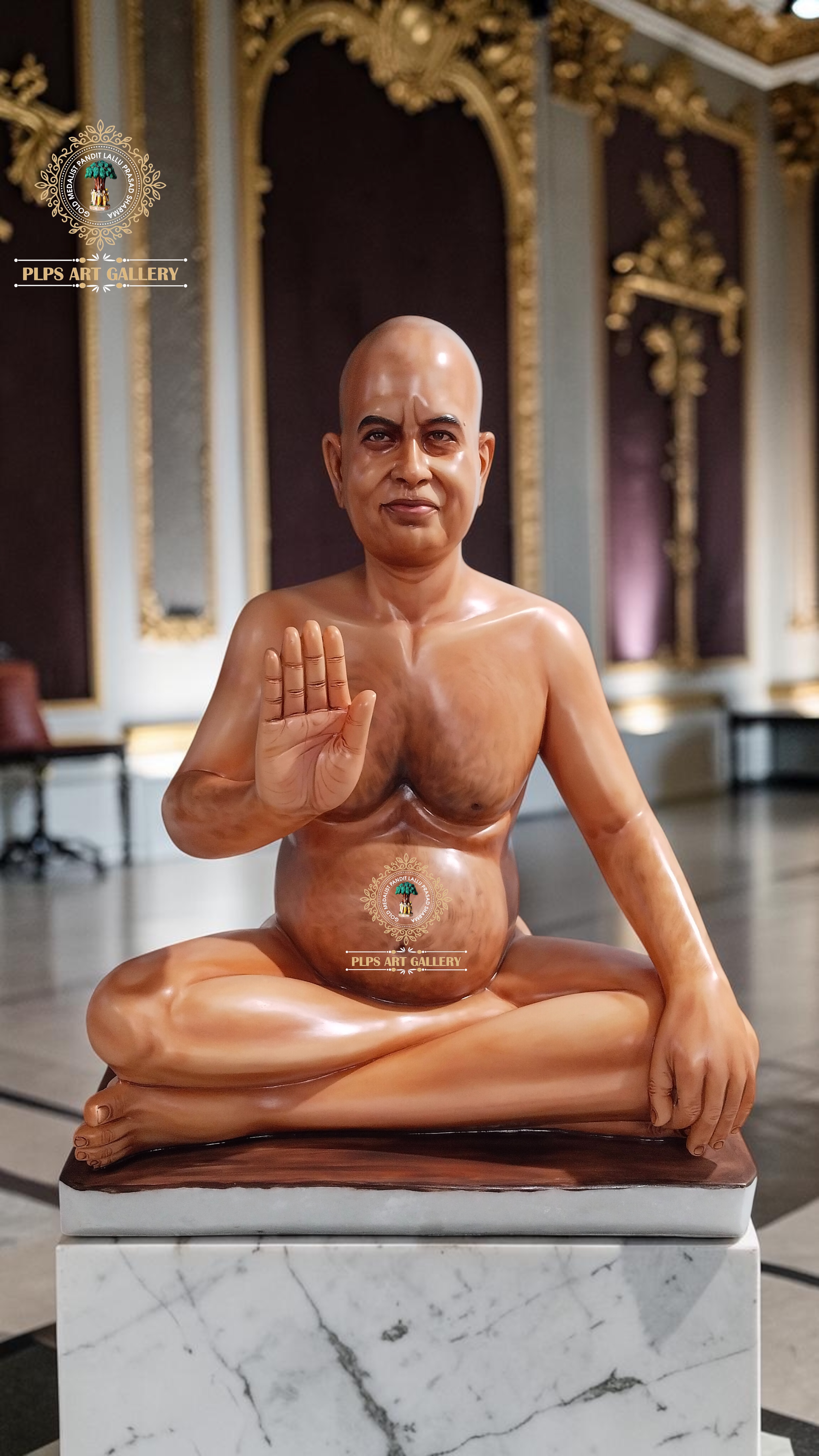
Made-to-Order Only
Our human bust statue are crafted exclusively on commission. Share your size, marble type and iconography — our fourth-generation artisans will begin your piece at our Chandpole Bazaar workshop, Jaipur.
Start a Commission