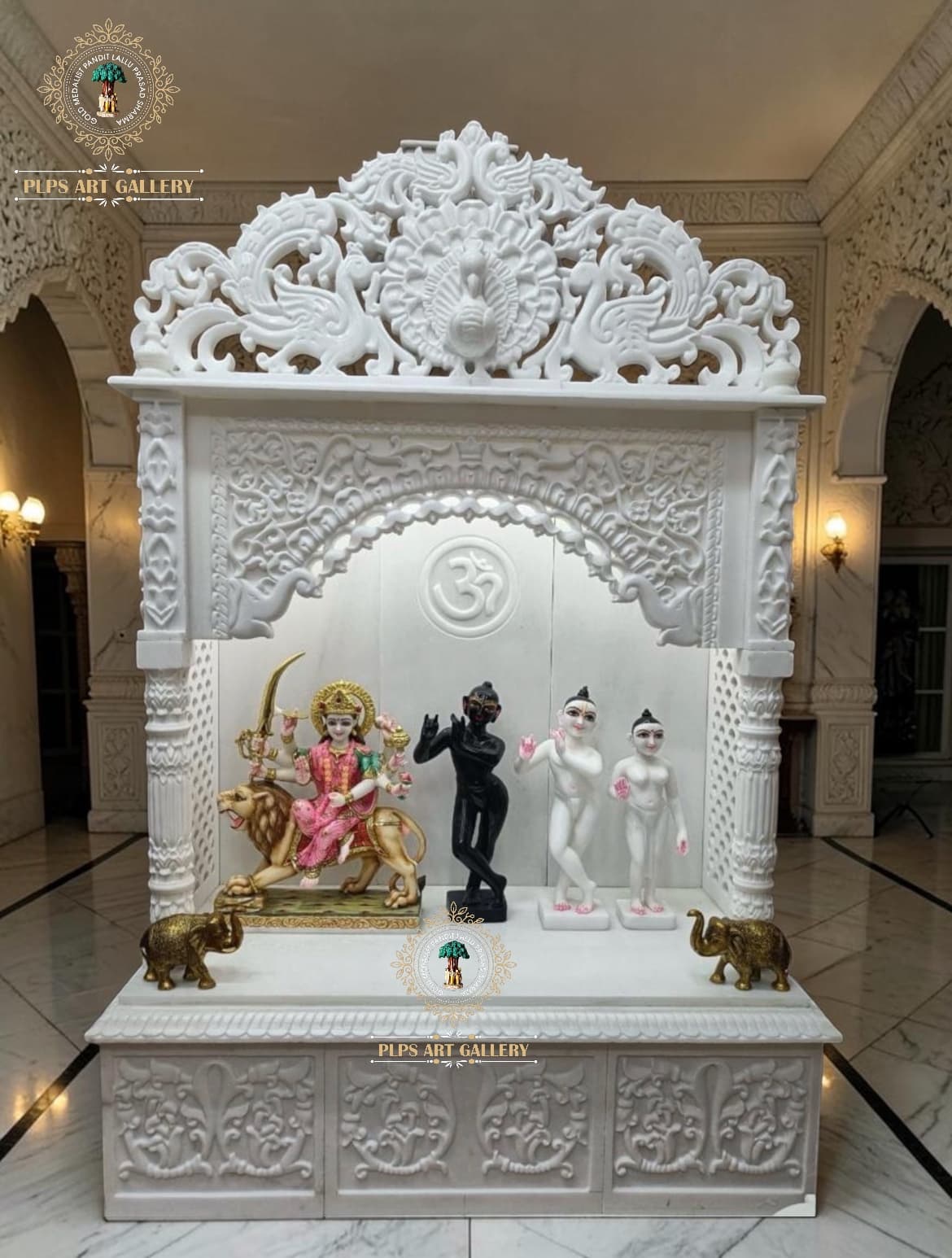
A marble mandir at home is a decades-long spiritual and Vastu decision. Unlike wooden or metal mandirs that need replacing every 15–20 years, a quality hand-carved marble mandir lasts over a century and often becomes a family heirloom passed down across generations.
Vastu — Key Placement Rules
Best Direction: North-East (Ishaan) corner
Alternative: East or North (never South)
Deity Facing: East or North
Height: Chest height when seated for puja
Avoid: Bedrooms, bathrooms, under staircases
Why Marble for Home Mandir
Marble is considered sattvic in Sanatan tradition and used across every major Hindu temple in India. Whether Makrana, Vietnam White, or Bhainslana — a quality hand-carved marble mandir lasts 100+ years, stays cool for meditative puja, handles daily abhishekam without damage, and appreciates as heirloom across generations.
Best Size for Home Mandir
2 to 3 Feet
Apartments — table-top or wall-mounted, single deity worship.
3 to 5 Feet
Standard puja room, fits 2–3 deities with lamp and offerings.
5 to 6 Feet
Bungalow homes, dedicated shrines, elaborate rituals.
6 Feet and Above
Joint families, permanent installation with platform.
Types of Marble — Choose What Suits You
Every marble type has its own character. All are durable when hand-carved by skilled artisans:
- Makrana — traditional gold standard, dense white finish, same quarry as the Taj Mahal, extremely durable
- Vietnam White — pure white with smooth polish, slightly softer, excellent for detailed carving work
- Bhainslana — fine-grained Indian marble with warm golden tones, ideal for a richer aesthetic
- Coloured Marble — green onyx, beige, rose for modern homes wanting distinct look
The choice depends on your aesthetic preference and budget — all three white options (Makrana, Vietnam, Bhainslana) deliver century-long lifespan when hand-carved properly.
Design Elements to Check
A quality mandir has three sections — base (peeth), deity chamber (garbha), and roof (shikhar/gopuram). Look for hand-carved gopuram detailing, intricate jaali (lattice) work, decorative toran above deity chamber, and hand-turned pillars. Machine-cut mandirs lack this fineness.
Authentic vs Composite — 3 Tests
Around 70% of marble mandirs online are cast composites (marble dust + resin). Verify authentic hand-carved marble (any type) with:
- Weight — real marble is 2.5–3× denser than composite
- Temperature — genuine marble stays cool; composites warm quickly in hand
- Base seam — cast pieces show mould-line; hand-carved shows chisel marks under light
Where Authentic Mandirs Are Made
Jaipur's Khazane Walon Ka Rasta is the traditional hub where multi-generation shilpi families of the Adi Gaur Brahmin Murti Samaj still hand-carve. Our workshop, PLPS Art Gallery, founded 1950 by Shilp Guru Pandit Lallu Prasad Sharma (Shilp Guru Award 2008, National Award, Gold Medal), builds custom marble mandirs in Makrana, Vietnam White, and Bhainslana marble — from 2 feet to 8 feet.
Custom Marble Mandir for Your Home
Hand-carved to your exact size. Custom orders take 45–90 days.
Get in TouchFrequently Asked Questions
Which direction should the marble mandir face?
Place the mandir in the North-East (Ishaan) corner with deities facing East or North. Never place in a bedroom, bathroom, under a staircase, or facing South.
What size marble mandir is best for a home?
For apartments, 2–3 feet works (table-top or wall-mounted). Standard homes with puja rooms need 3–5 feet. Bungalows with dedicated shrines suit 5–6 feet. Joint families or community spaces require 6+ feet.
How do I identify hand-carved marble vs composite?
Three quick tests — weight (real Makrana feels substantially heavier), temperature (genuine marble stays cool), and base inspection (composites show mould-line seams while hand-carved reveals chisel marks under light).
Which marble type is best for home mandir?
Makrana marble is the traditional gold standard — dense, pure white, lasts centuries. Vietnam White is a softer budget alternative. Bhainslana offers warm golden tones. Coloured marbles like green onyx suit modern homes.
How long does a hand-carved marble mandir last?
A well-maintained Makrana marble mandir lasts 100+ years and is often passed to the next generation. Wooden mandirs typically need replacement in 15–20 years; metal mandirs tarnish over time.
How long does a custom marble mandir take?
Custom hand-carved marble mandirs take 45–90 days depending on size and detailing. Compact 2-foot designs with stock patterns may ship in 30 days. Large 6-foot mandirs with elaborate jaali and gopuram work take 60–90 days.