One Devotion
An honest, workshop-floor comparison of Makrana, Vietnam and Bhainslana — the three stones every marble murti buyer will hear about, from four generations of PLPS Shilpis in Jaipur.
Choosing a marble for a handcrafted statue or murti is one of the most consequential decisions a buyer makes — and one of the most misunderstood. Walk into any Chandpole Bazaar workshop in Jaipur and you'll hear three names again and again: Makrana, Vietnam, and Bhainslana. At PLPS Art Gallery, four generations of our Shilpi lineage have carved handcrafted marble statues in all three. This guide is the honest, workshop-floor comparison we wish every marble murti buyer read before commissioning.
Before we go into the details, let us state one thing clearly, because most marketing pages will not: every deity can be carved in every one of these three marbles. Radha Krishna in Makrana, Mahakali in Bhainslana, Buddha in Vietnam — all work. Any Shilpi worth commissioning can carve any deity in any of these stones. What differs is the finished look — the colour, the light, the density of detail, and the aesthetic your statue will carry into your mandir. Certain marble-deity pairings read more traditionally than others (Hanuman-sindoor doesn't visually work on black stone; a fierce Kaali form loses its gravitas in pure white) — but the choice is aesthetic, not mandatory. There is no "correct" marble for a specific deity. There is only the marble whose look suits you and your home.
There is no correct marble for a deity. There is only the marble whose look suits you and your home.
— Workshop wisdom, four generations
शिलानां शिल्पविज्ञानं धर्मार्थं मोक्षसाधनम्।
यत्नेन कार्यं शिल्पिभिः देवमूर्तिनिर्माणे॥
"The science of stone-craft is a means to dharma, prosperity, and liberation itself. With devotion the Shilpi must apply it when carving the form of a deity." — from the Shilpa Shastra tradition
Which Marble Is Best for a Statue?
All three marbles can carve any deity beautifully. The choice is not about which is "best" — it is about the look, budget, and placement you want. Makrana (dense white, from Rajasthan) is the classical devotional choice, the same marble used in the Taj Mahal. Vietnam marble is a brighter, slightly softer white — often chosen for smaller pieces where facial detail matters. Bhainslana is a deep black marble from Rajasthan — the traditional stone for Shani Dev, Mahakali, Bhairava and Shivling, and increasingly used as a bold contrast platform beneath white deities.
Below we explain each marble in the honest terms a working carver would use — properties, character, and the visual outcome — so you can decide what suits your commission rather than being told what to buy.
Makrana — The Classical Devotional White
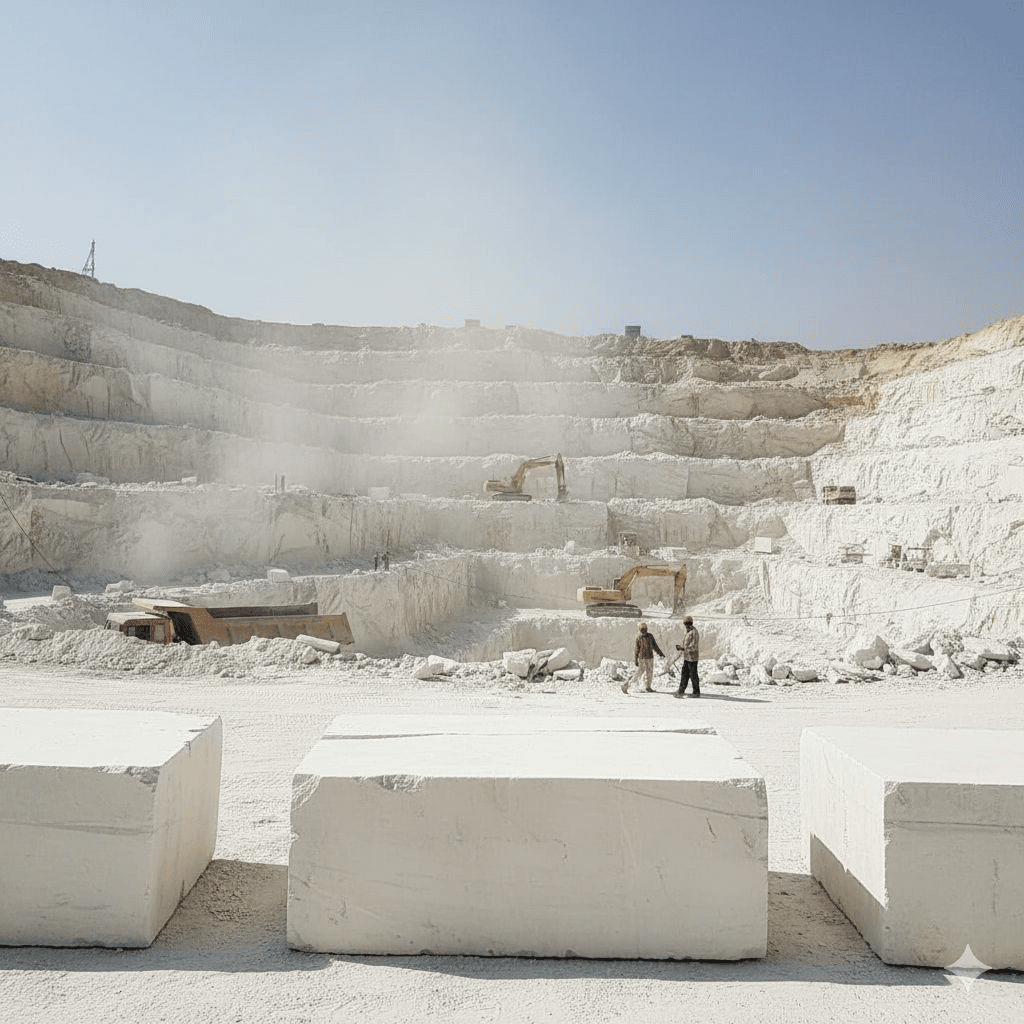
Makrana's defining property is calcite density: extremely tight-grained and unusually pure white with subtle greyish veining. It takes a fine polish that deepens rather than dulls over centuries — the Taj Mahal's marble still gleams almost 400 years after installation. Density also means it holds intricate carved detail without spalling: this is why Makrana handcrafted marble statues remain crisp for generations, even multi-armed forms with fine ornament.
Within Makrana there are three quality grades. Kumari is the finest, purest white, reserved for premium commissions. Panwari carries slight veining and is the workshop standard. Doongri is a durable everyday grade. PLPS uses Kumari or Panwari for all devotional marble murti commissions.
Popular for: classical marble murtis, gold-leafed statues, sindoor-painted variants, and any commission where a timeless white finish is wanted. If you have no strong preference and want the safest, most classical choice, Makrana is what most buyers gravitate toward — but it is a preference, not a rule.
Price consideration: Makrana is widely available and generally the most cost-effective of the three per cubic foot, though price scales significantly with grade (Kumari is a premium tier).
Vietnam Marble — Brighter White, Fine Grain
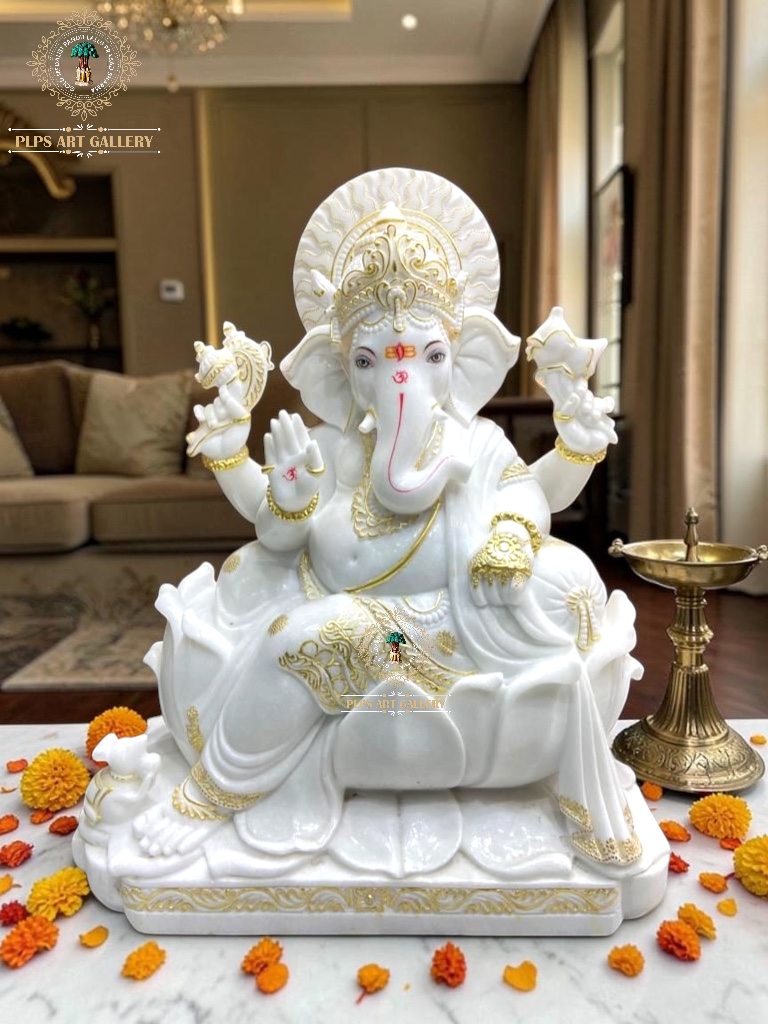
Vietnam marble is slightly softer than Makrana on the Mohs hardness scale. Some Shilpis find this easier for very fine facial detail on smaller pieces; others prefer the resistance Makrana gives. The colour is a brighter, cooler white with fewer visible veins, giving the finished marble statue a modern, luminous quality.
Because it is more porous than Makrana, Vietnam marble benefits from sealing if installed in outdoor or high-humidity environments. For indoor mandirs and puja rooms, this difference is negligible over normal lifespans.
Popular for: buyers who want a very bright, modern-white aesthetic; smaller commissions where the sculpture's expressiveness lives in the face; contemporary temple interiors where a cooler white suits the design language. All of these are visual preferences — any deity, any size can still be carved in Vietnam marble.
Price consideration: Vietnam marble typically sits in a middle price band — usually costlier than everyday-grade Makrana but comparable to premium Makrana Kumari, depending on availability at the time of commission.
Bhainslana — The Sacred Black Marble
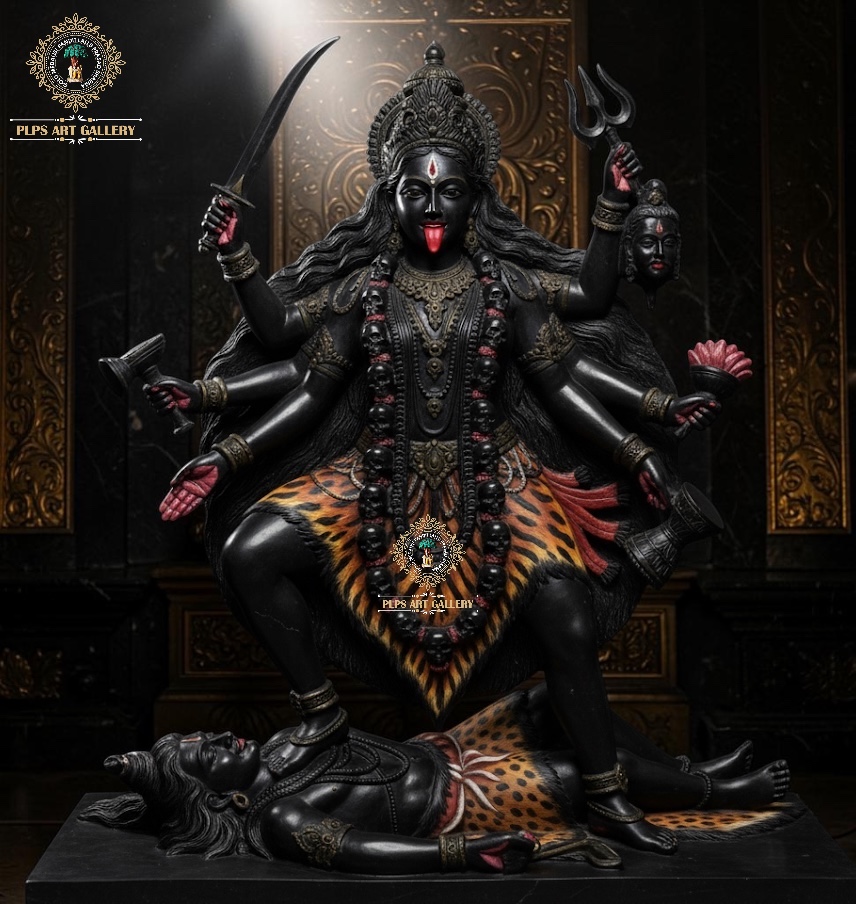
Bhainslana's defining property is its deep, uniform black tone — a stone-native colour, not a stain or a finish, arising from iron and carbonaceous mineral content in the seams. Polished, it takes a mirror-dark finish that reads as almost obsidian in low light and reveals fine crystalline structure under direct light. Density is comparable to Makrana, so it holds fine carved detail equally well — every eye, weapon, and ornament stays crisp.
Because the colour is stone-native rather than painted, a Bhainslana marble statue never needs surface repainting — the finish is permanent for the life of the sculpture. This is a real advantage for outdoor installations and shrines where painted finishes weather and require maintenance.
Popular for: deities traditionally rendered in black — Shani Dev, Mahakali, Bhairava, Kaal Bhairav — where the dark stone carries the iconographic gravitas the form demands. Also for Shivling commissions where a black stone base is preferred, and increasingly as a bold contrast platform or chowki beneath white Makrana deities — the black-on-white pairing reads as intentional and reverent rather than mismatched. Again, all visual and preference-based — not rules.
Price consideration: Bhainslana typically sits at the higher end of pricing due to the density and specific carving discipline black marble demands (defects show more clearly on a dark polished surface, so the Shilpi's tolerance is tighter). The elimination of painting and long-term repainting costs partly offsets this for outdoor and heritage commissions.
Side-by-Side Comparison
| Property | Makrana | Vietnam | Bhainslana (Black) |
|---|---|---|---|
| Origin | Nagaur, Rajasthan | Yen Bai / Nghe An, Vietnam | Bhainslana, Rajasthan |
| Colour | Pure white with subtle grey veins | Brighter, cooler white | Deep uniform black |
| Density | Very high (Mohs ~4) | Slightly softer | High, similar to Makrana |
| Fine-detail carving | Excellent | Excellent (small pieces) | Excellent |
| Longevity | 400+ years proven (Taj Mahal) | Excellent indoors, seal for outdoor | Excellent, weathers gracefully |
| Takes gold leaf / paint | Yes, traditionally used with both | Yes | Rarely painted — natural black is the finish |
| Can carve any deity? | Yes | Yes | Yes |
| Relative price | Most cost-effective | Mid-tier | Premium (rarest) |
| Availability | Standard at all workshops | Growing availability | Rare — PLPS speciality |
Popular Buyer Choices by Deity
To be clear again: any deity can be carved in any of these three marbles. What follows are the most common preferences we see at our workshop — how buyers naturally gravitate — not prescriptions.
Radha Krishna
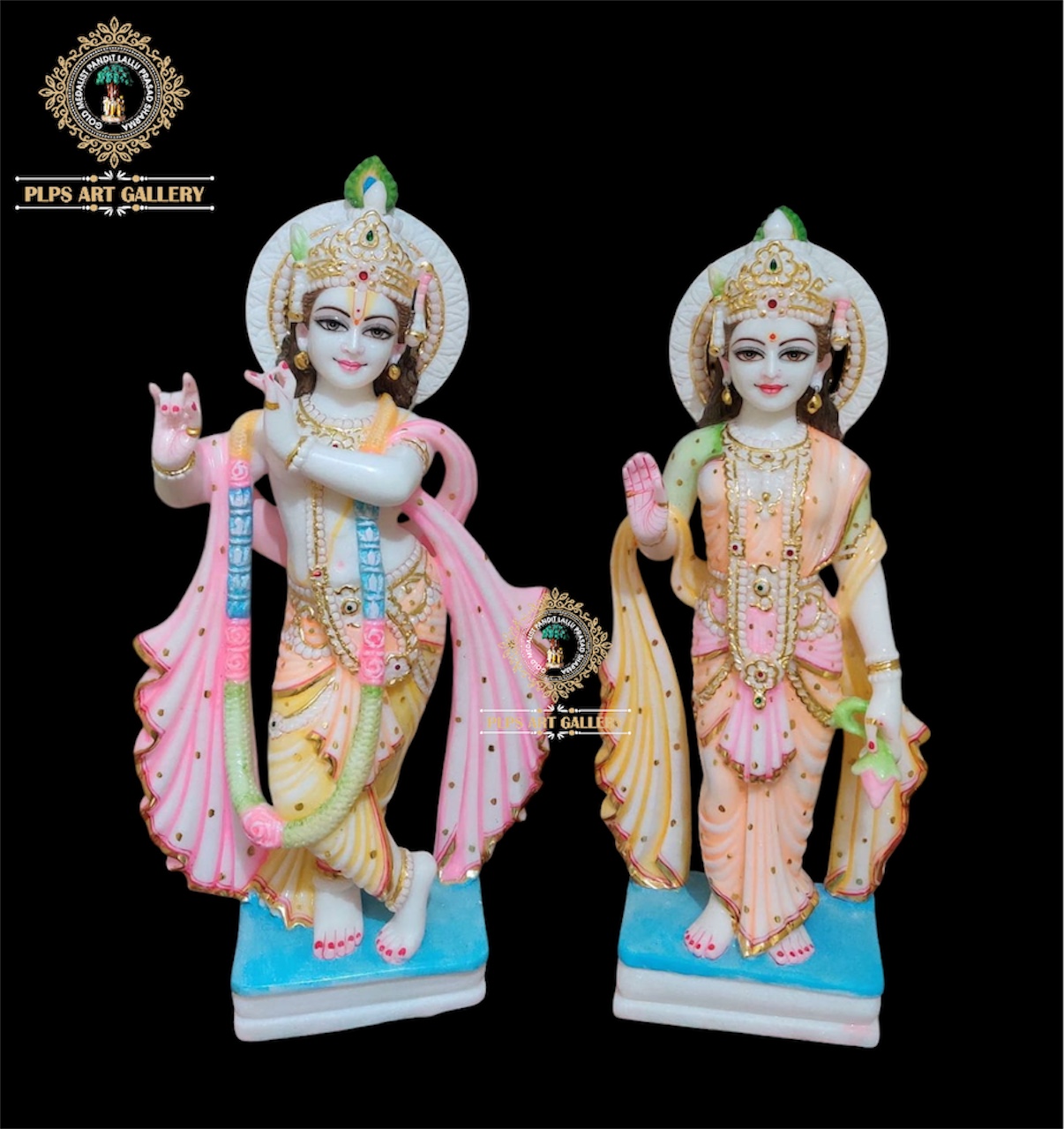
Most commissions come in Makrana for the classical devotional look. Vietnam is a common choice when the customer wants brighter white or a smaller detail-focused piece. Bhainslana is uncommon for Radha Krishna — the black stone suits the Vitthal/Panduranga form of Krishna (traditionally rendered in black stone) more than the Radha Krishna pairing. Browse Radha Krishna marble murtis →
Ganesha
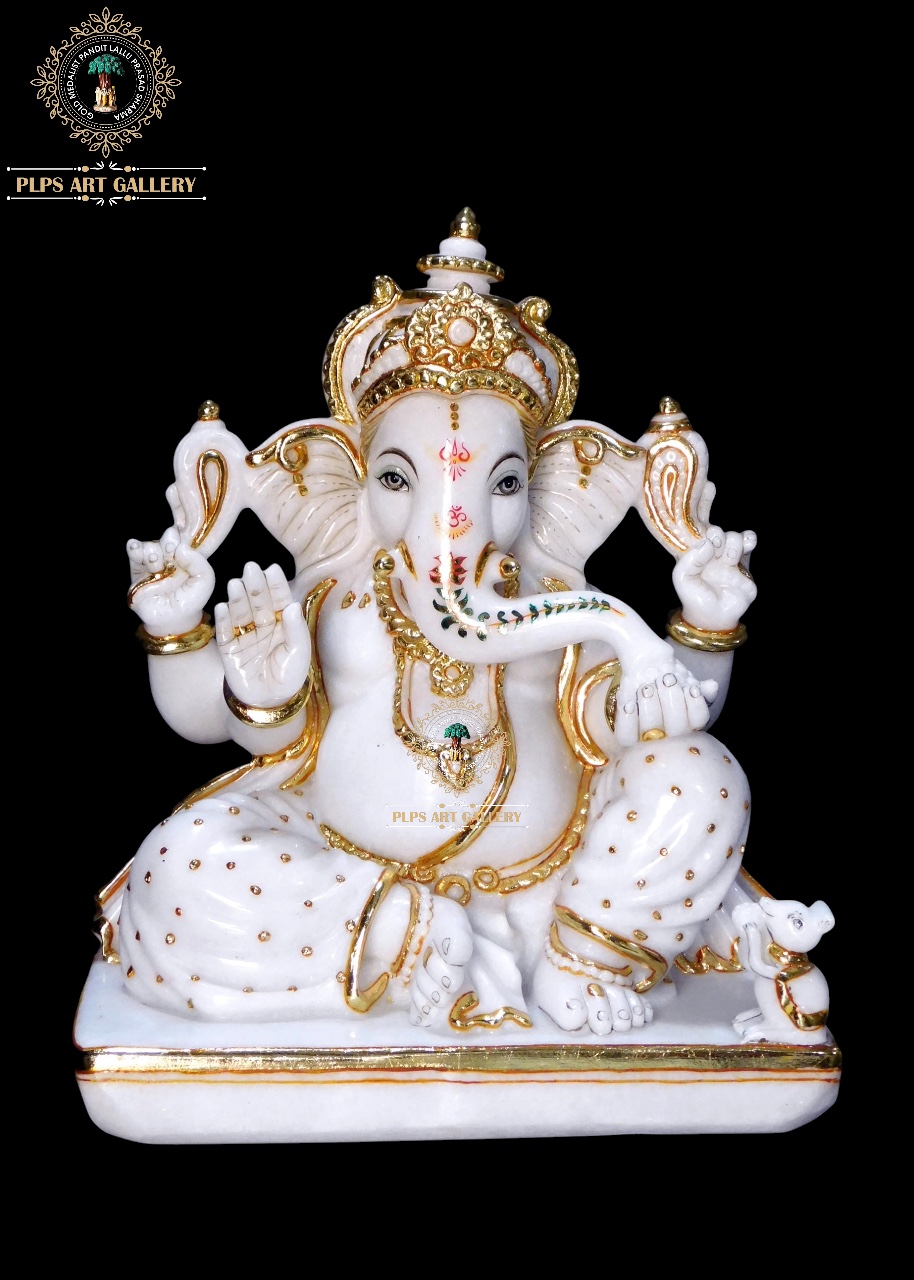
Makrana is the most common because it takes gold leaf and sindoor paint traditionally. Vietnam is chosen when a brighter, cooler white finish is preferred. Bhainslana Ganesha is uncommon but strikingly modern when paired with gold leaf detailing on a black base. Browse Ganesh marble statues →
Hanuman
Makrana with a painted sindoor body is the traditional choice — the classical route used by temples across India for generations. Vietnam is a fine choice for smaller Hanuman commissions where facial expression carries the sculpture. Bhainslana is rarely used for Hanuman since sindoor doesn't read against black stone. Read our Hanuman marble statue buyer's guide →
Shiva, Shivling & Bhairava
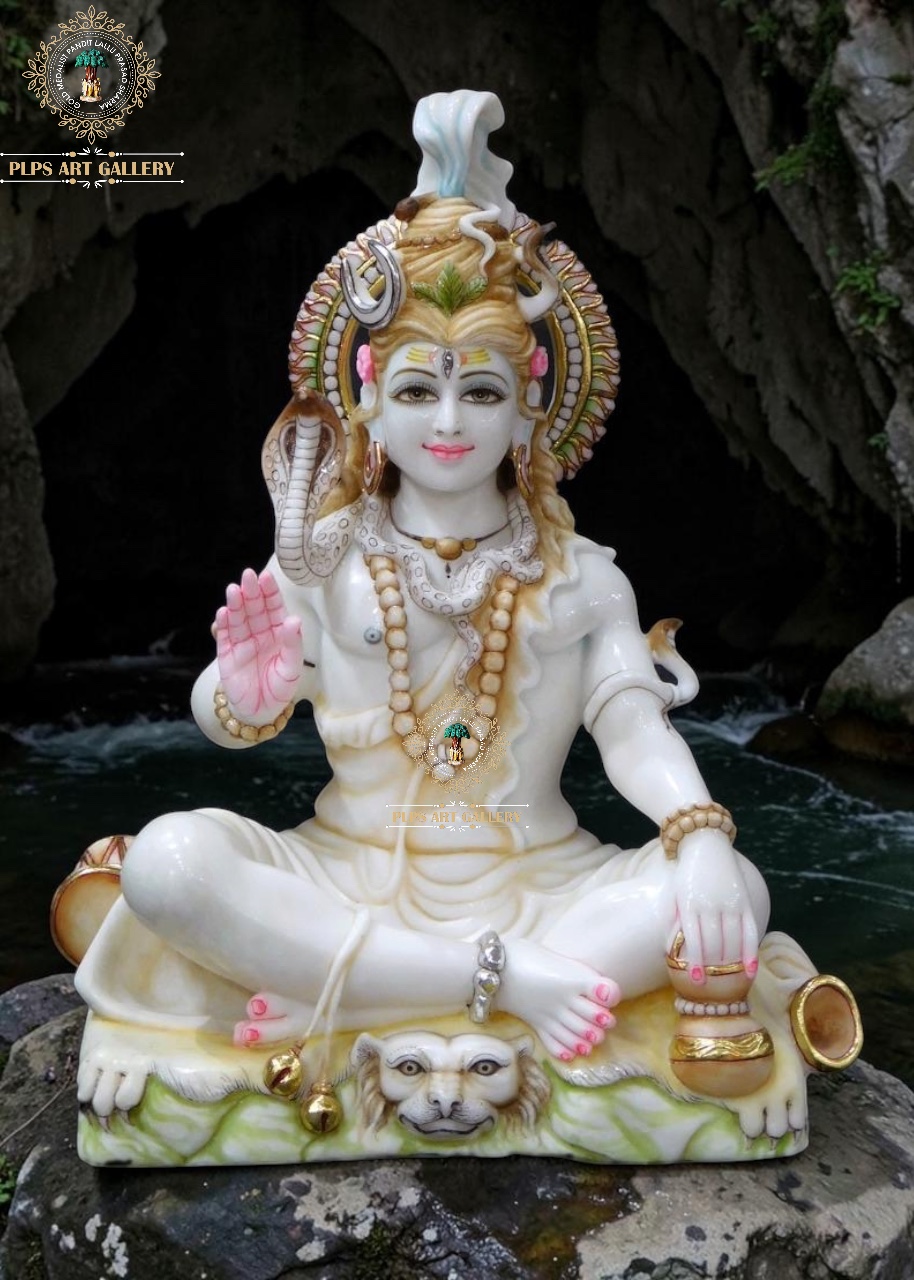
Bhainslana is a strong traditional choice here — black Shivlings are revered across India, and fierce forms like Bhairava and Kaal Bhairav carry their iconographic weight naturally in black stone. Makrana remains the mainstream choice for standard Shivlings and Nataraja. Vietnam suits smaller detail-focused pieces. Read our Shiva & Shivling guide →
Durga, Kaali & Devi Forms
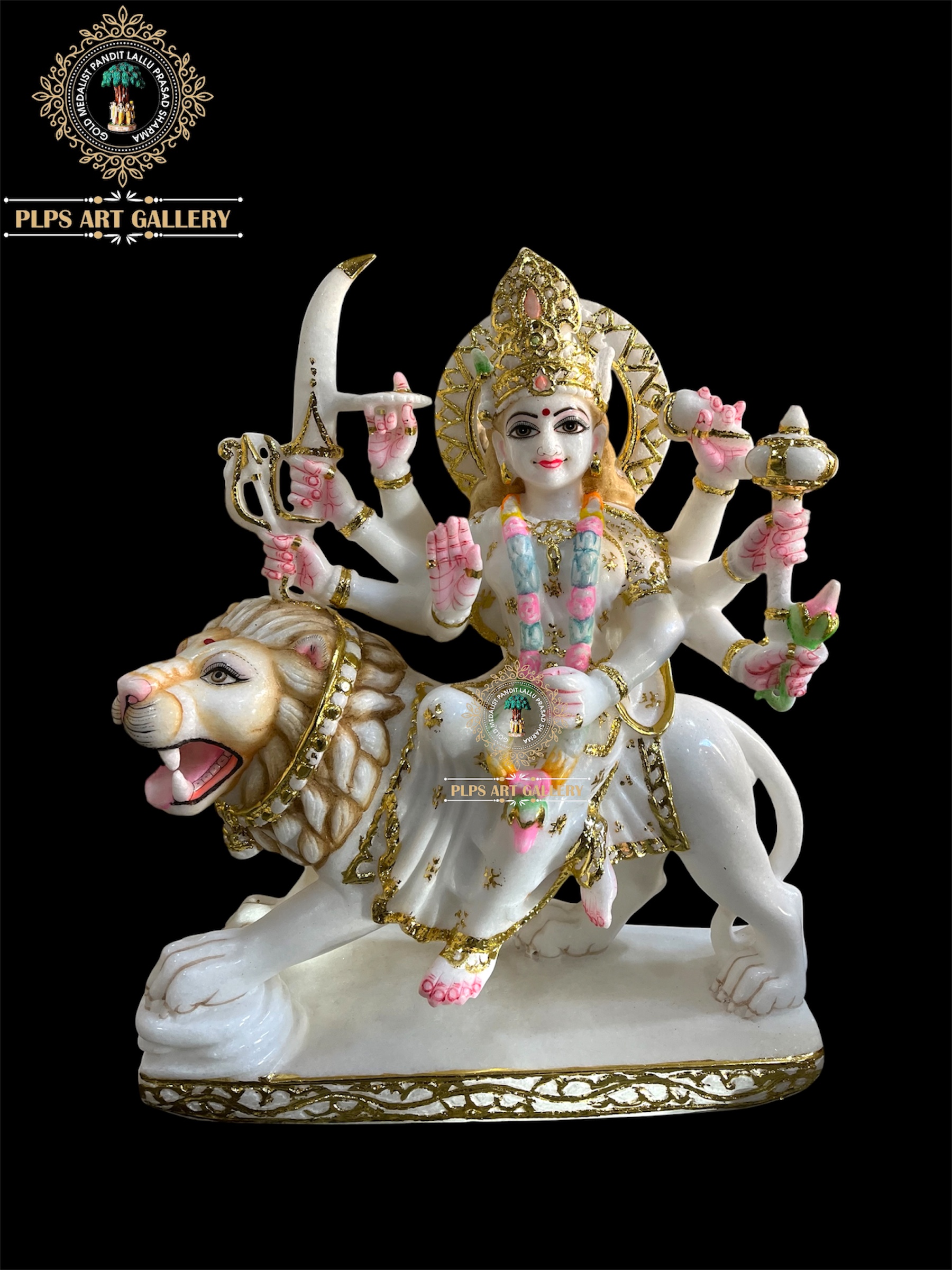
Makrana is the classical choice for multi-armed Durga because the density holds every arm, weapon, and ornament crisp. Mahakali and Chamunda — the fiercer forms — are traditionally rendered in Bhainslana black, where the dark stone carries the deity's protective gravitas. For Saraswati, Laxmi, and Ambaji, Makrana or Vietnam are the natural choices. Read our Durga Maa guide →
Home Mandir Structures (Chowki, Singhasan, Panels)
Makrana leads for its durability across generations of daily worship. Bhainslana panels are increasingly used as bold contrast — a black platform or chowki under a white Makrana deity reads as intentional and reverent rather than mismatched, and requires no paint maintenance. Read our marble mandir buying guide →
How to Identify Authentic Makrana Marble
Marble mislabelling is a real problem in the Indian sculpture market — Vietnam or Chinese marble is sometimes sold as Makrana, and generic "white marble" is often quoted without any quarry specificity. Three practical checks help you verify what you are buying:
Buyer's Verification Checklist
1. Ask for the quarry name and grade in writing: a legitimate workshop will state Makrana grade (Kumari / Panwari / Doongri) or specify "Vietnam" or "Bhainslana" with regional detail — not just "white marble."
2. Request an unpolished cut sample: authentic Makrana shows a fine crystalline structure and characteristic subtle grey-white veining; Vietnam is slightly finer-grained and cleaner; Bhainslana shows a deep uniform black with fine crystalline structure visible under direct light, not a painted or coated surface.
3. Weight test: Makrana and Bhainslana are notably heavier per unit volume than Vietnam. If a "Makrana" piece feels unusually light, ask questions.
At PLPS every marble statue commission is delivered with a written certificate stating the marble type, grade (where applicable), commission dimensions, and lead Shilpi's name. This is our workshop standard and — in our observation — remains rare across Chandpole Bazaar.
Marble Statue Care — Regardless of Which You Chose
All three marbles benefit from the same simple care routine. Follow this and your handcrafted marble murti will look as clean in twenty years as it does today.
Weekly: dust the sculpture with a soft dry natural-hair brush. Focus on undercuts — inside sleeves, under crowns, behind ornaments — where dust accumulates and darkens marble over time.
Monthly: a barely damp muslin cloth on smooth surfaces (body, base, background). Dry immediately with a soft cotton cloth. Never leave any marble surface wet.
Never use: vinegar, lemon juice, citrus cleaners, ammonia, or any household spray. These are acidic and etch marble permanently, leaving cloudy patches that no polish can restore. This applies equally to Makrana, Vietnam, and Bhainslana.
For painted-sindoor bodies and gold-leaf accents: dust only — never wipe, never wash. Water and cloth friction lift both sindoor paint and gold leaf. Every PLPS marble statue ships with a written care card specific to its finish.
Why Hand-Carved Matters — Regardless of Marble
No marble, however premium, saves a machine-cut sculpture. The stone determines the ceiling of what is possible; only the hand of a trained Shilpi determines whether the sculpture reaches that ceiling. At PLPS, every handcrafted marble statue is carved from a single block by the fourth-generation lineage that produced our founder, Shilp Guru Pandit Lallu Prasad Sharma (1991 Presidential Awardee). No assembly, no joins, no shortcuts — because the marble deserves it, and so does the deity.
Not Sure Which Marble Suits Your Commission?
Share the deity, the size, and where the sculpture will live — our fourth-generation Shilpis will walk you through what each marble will look like for your specific commission, and craft it at our Chandpole Bazaar workshop in Jaipur.
Request a custom quote · plpsartgallery@gmail.com · +91-7737257289
Custom commissions typically take 30 to 90 days. Worldwide shipping in specialized wooden crating.
What Buyers Ask Most
Makrana or Vietnam — which marble is better?
Neither is objectively better — they are different. Makrana is the classical devotional white with 400+ years of proven longevity (it is the Taj Mahal marble) and slightly higher density. Vietnam is a brighter, cooler white and slightly softer, which some Shilpis prefer for very fine facial detail on small pieces. Both can carve any deity. Choose Makrana if you want the timeless classical look; choose Vietnam if you want a brighter modern white or the piece is small and expression-focused.
Is Makrana marble really the same stone used in the Taj Mahal?
Yes. The Makrana quarries in Nagaur district, Rajasthan supplied the white marble for the Taj Mahal in the 1630s and continue to operate today. The same seam, the same quarrying region — nearly four hundred years apart. Within Makrana, the finest grade is Kumari, then Panwari, then Doongri. The Taj was built primarily from what would today be classified as Kumari-grade Makrana.
Which marble should I choose for a Hanuman statue?
Makrana with a painted sindoor body is the traditional and most widely used choice for Hanuman — the route used by temples across India for generations. Vietnam marble suits smaller Hanuman commissions where facial expression carries the sculpture. Bhainslana (which is a black marble) is rarely used for Hanuman since sindoor doesn't visually read against a dark stone surface. The right choice is whichever look you prefer to live with — not a rule.
How do I know if my marble statue is really Makrana?
Three signals help. First, ask for the Makrana grade in writing — Kumari, Panwari, or Doongri; a legitimate workshop names it. Second, request an unpolished cut sample and look for the fine crystalline structure and subtle grey-white veining characteristic of Makrana. Third, weight-test the piece — Makrana is notably heavier per unit volume than Vietnam or Chinese marble. At PLPS every commission ships with a written certificate stating the marble type and grade.
What is the price difference between Makrana, Vietnam, and Bhainslana marble?
Makrana is generally the most cost-effective, though price varies significantly by grade — Kumari (finest) is a premium tier while Doongri (everyday) is more accessible. Vietnam typically sits in the middle price band, comparable to premium Makrana. Bhainslana (black marble) typically sits at the higher end of pricing due to the density and the tighter carving discipline black stone demands. For a specific commission, dimensions, finish, and Shilpi hours matter more than marble type alone — a small Vietnam bust can cost less than a large Doongri Makrana piece. Contact us for a commission-specific quote.
Can I mix marbles in a single mandir installation?
Yes — and done thoughtfully it looks striking. A common PLPS commission combines a Makrana white deity on a Bhainslana black platform or chowki, creating a bold black-on-white contrast that reads as intentional and reverent rather than mismatched. Another approach is Makrana architecture (arches, panels, singhasan) with a Vietnam or Bhainslana deity as the focal point. The general rule is to lead with one marble and let the second serve as accent — mixing three in equal measure usually reads as busy rather than intentional.
How do I care for a marble statue at home?
Dust weekly with a soft dry natural-hair brush, focusing on undercuts. Monthly, use a barely damp muslin cloth on smooth surfaces and dry immediately — never leave the marble wet. Avoid all acidic cleaners: vinegar, lemon, citrus sprays and household chemicals etch marble permanently. For painted-sindoor bodies or gold-leaf accents, dust only — never wipe. This care routine applies to Makrana, Vietnam, and Bhainslana equally. Every PLPS statue ships with a written care card.